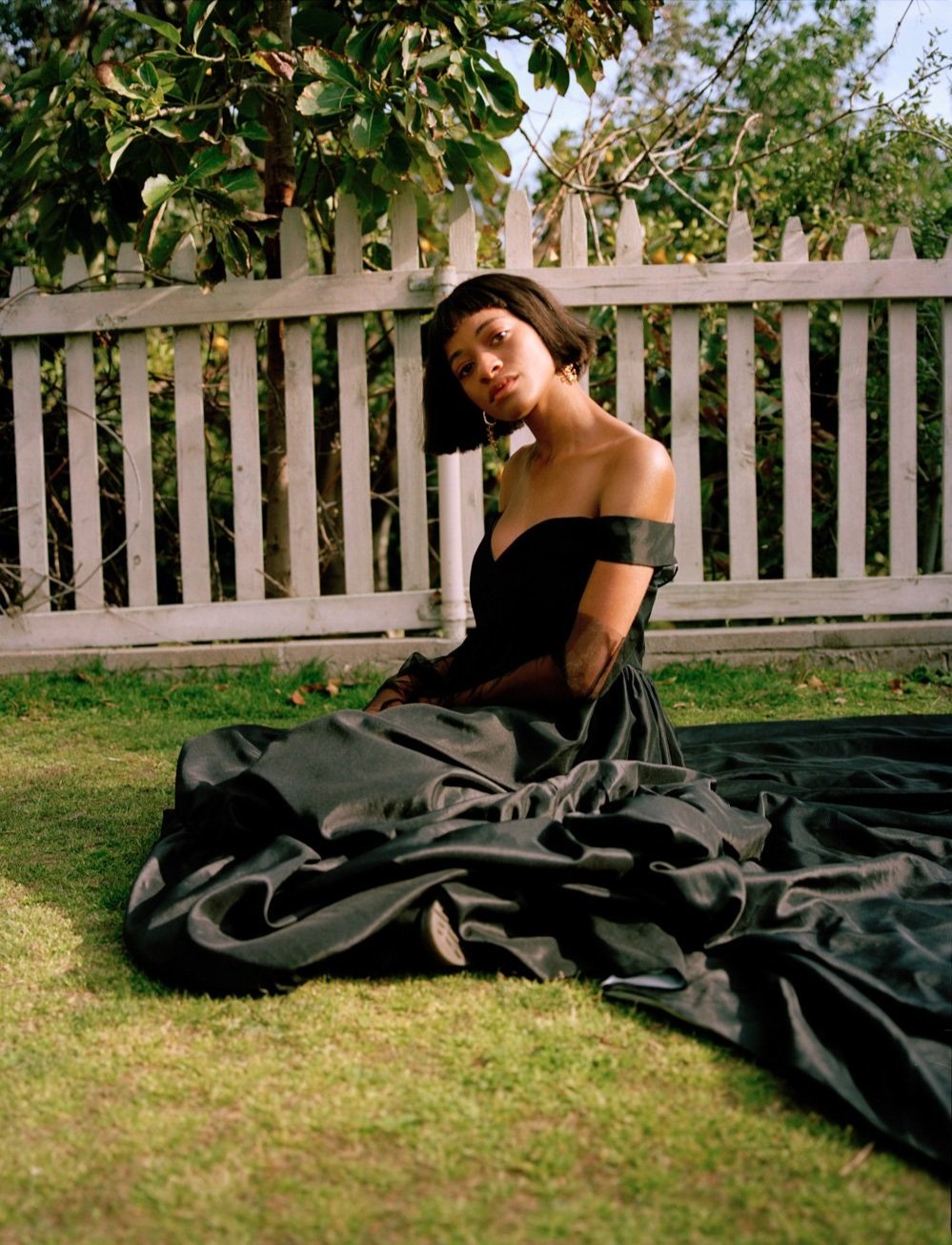
Celina Pereira

On Collecting, Collaging, and Reconstructing Collective Memory.
summer 2025
WORDS Rach Albright & Celina Pereira
PHOTOGRAPHY Molly Perez
Celina Pereira is an emerging Brazilian-American artist based between Los Angeles, CA and Mexico City, Mexico. Over the course of nine months spent moving between the two cities and countries, Pereira embarked on a project that could both fit into a carry-on and not quite fit into a singular idea.
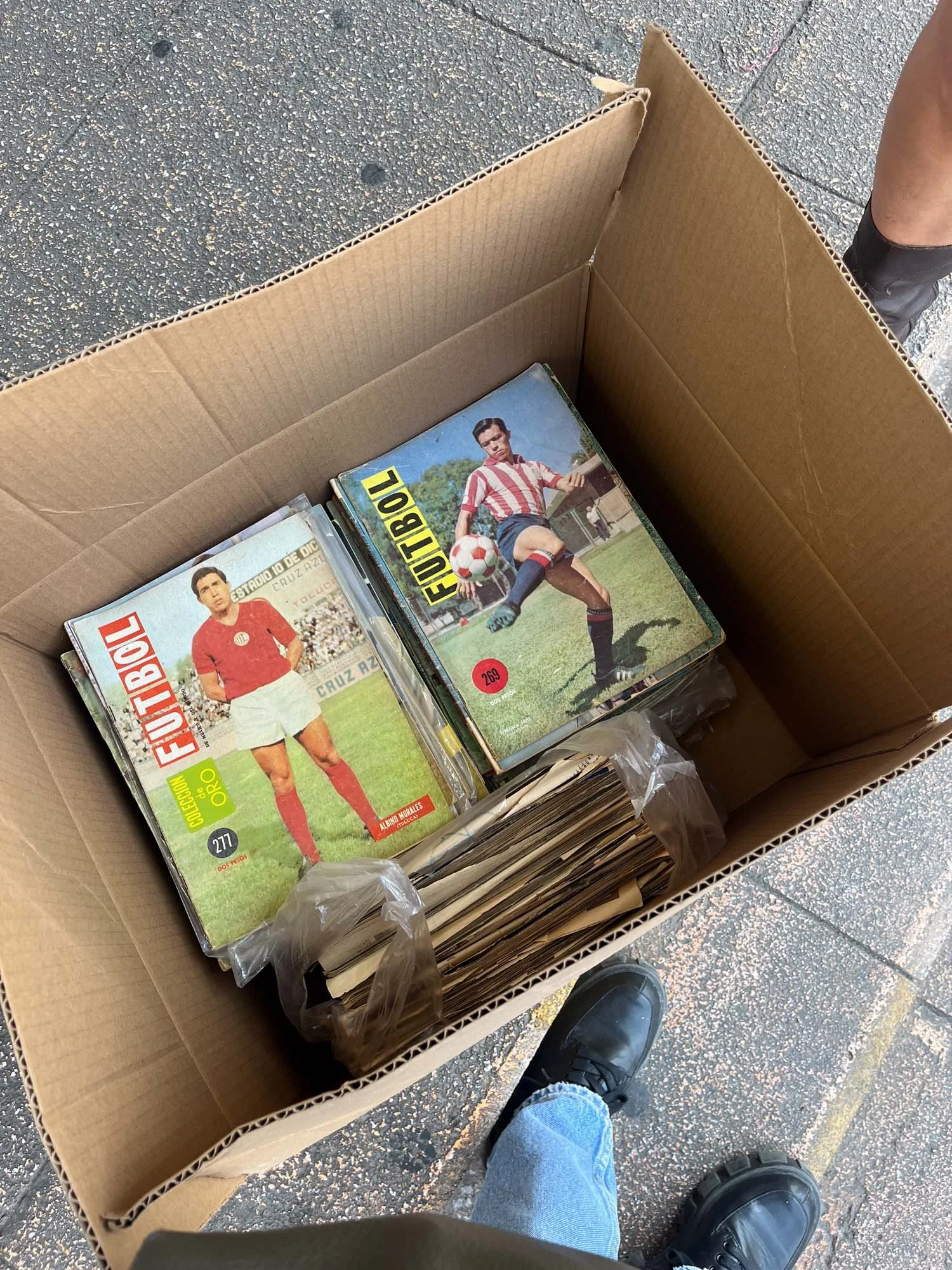
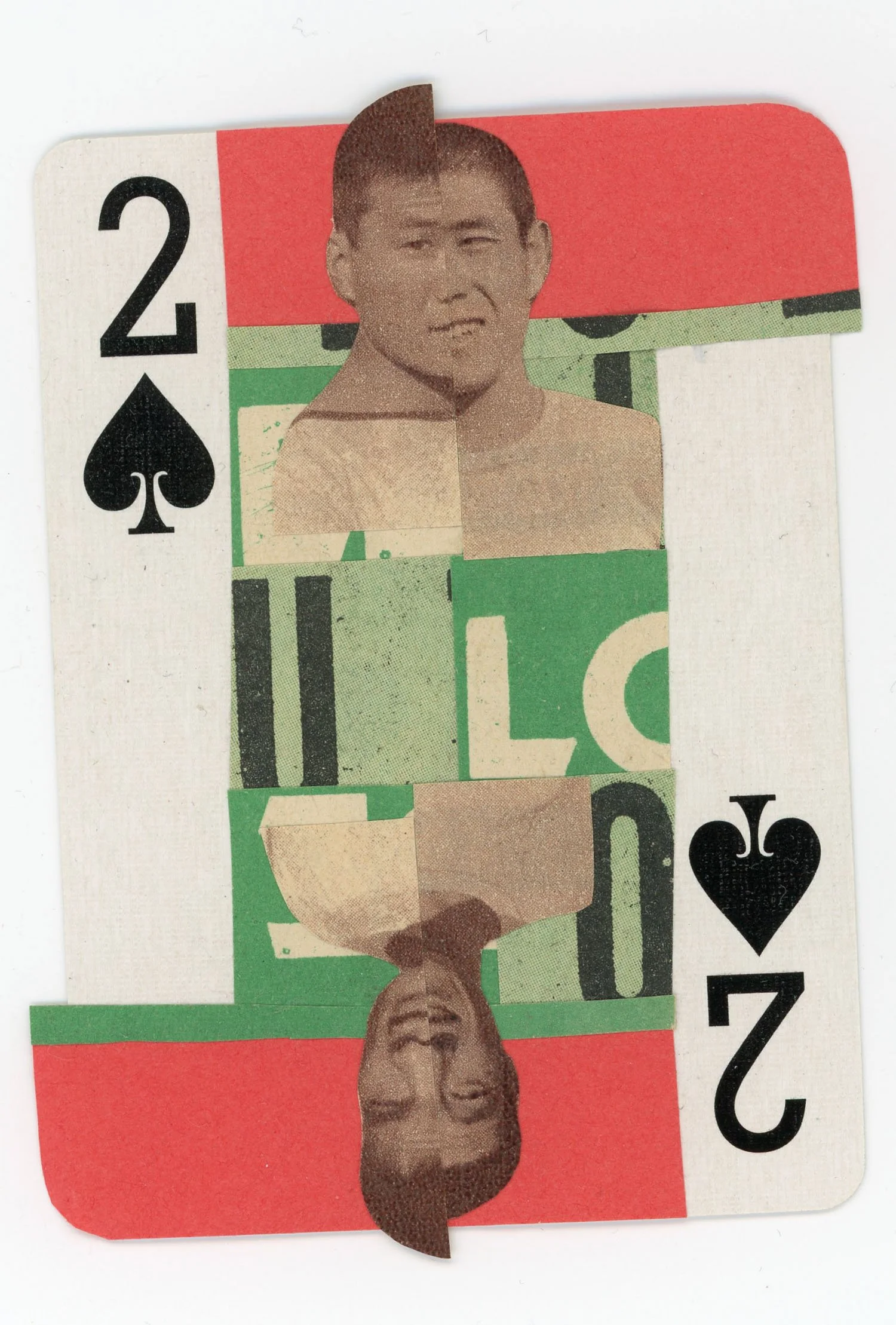
What began as a creative challenge—working small and in more detail—and from a practical perspective—the ability to travel with materials when moving between Mexico City and Los Angeles—morphed into something much bigger for Pereira. The source material was obtained in Mexico: Futbol magazines from the 1950s-70s, Tarea magazines (children's homework publications) from the 1980s-90s, the occasional Lucha Libre zine, and a found deck of cards.
Many of the collaged figures are male soccer players, which continues her long-standing practice of working with athletes. The predisposition stemmed from her fascination with their inherently emotive tendencies. In sport and in life, we see expressions of pain, joy, disappointment and victory; by taking figures out of their original context, she places them in new moments to create reimagined narratives.

Pereira's new work explores how acculturation affects identity, specifically how the immigrant experience adds a layer to collective memory. CARTAS—translating to ‘cards’ or ‘letters’ in both her native language of Portuguese and adopted Spanish—is a set of 54 playing cards, individually reworked and reimagined by the artist. The series touches on many themes, with its underlying narrative exploring the Latin perspective on Anglo cultural history and how it’s represented in simplified forms for children's comprehension. Within this framework, many subtle sub-themes are interwoven: questions about religion, partnership and love, responsibility and traditional life and gender roles, capitalism, and more.
"The unifying aspect of this series, and of this medium (collage), is a collective memory. Whether it's a scene you find familiar, a facial expression that says a thousand words, a figure you recognize or one that reminds you of someone, the amalgamation of our collective and individual experiences allows us to swim in the same pool of themes and yet have our unique experiences," Pereira reflects.

During this nine-month period of work, Pereira explored multiple thematic expressions. "It depends on who I am when I wake up each day. It depends on which card I look at and in which moment of life—of emotional state I am in," she says of the project. "It seemed that every day I would wake up with a new revelation about them. It's about misogyny! It's about flamboyancy! It's about hating men! It's about loving men! It's about the female gaze taking back its power! The truth is it's about all of these things and none of these things, and depicting those complex feelings in a satirical way; bringing lightness and play to heaviness."
She sees each character both as a self-portrait and simultaneously as representing the female gaze toward men. "When asked why I’ve used mostly men in my work, I realized it's not dissimilar to how male painters would have women sit for them—as muse and as object to mold as they wish." In this way she holds power over each miniature figure, how she constructs and views them. In this process, she moves to reclaim power over her positionality, while layering on nuance and play to the collected fragments. Collaging together new, more complex, versions of previously printed realities.
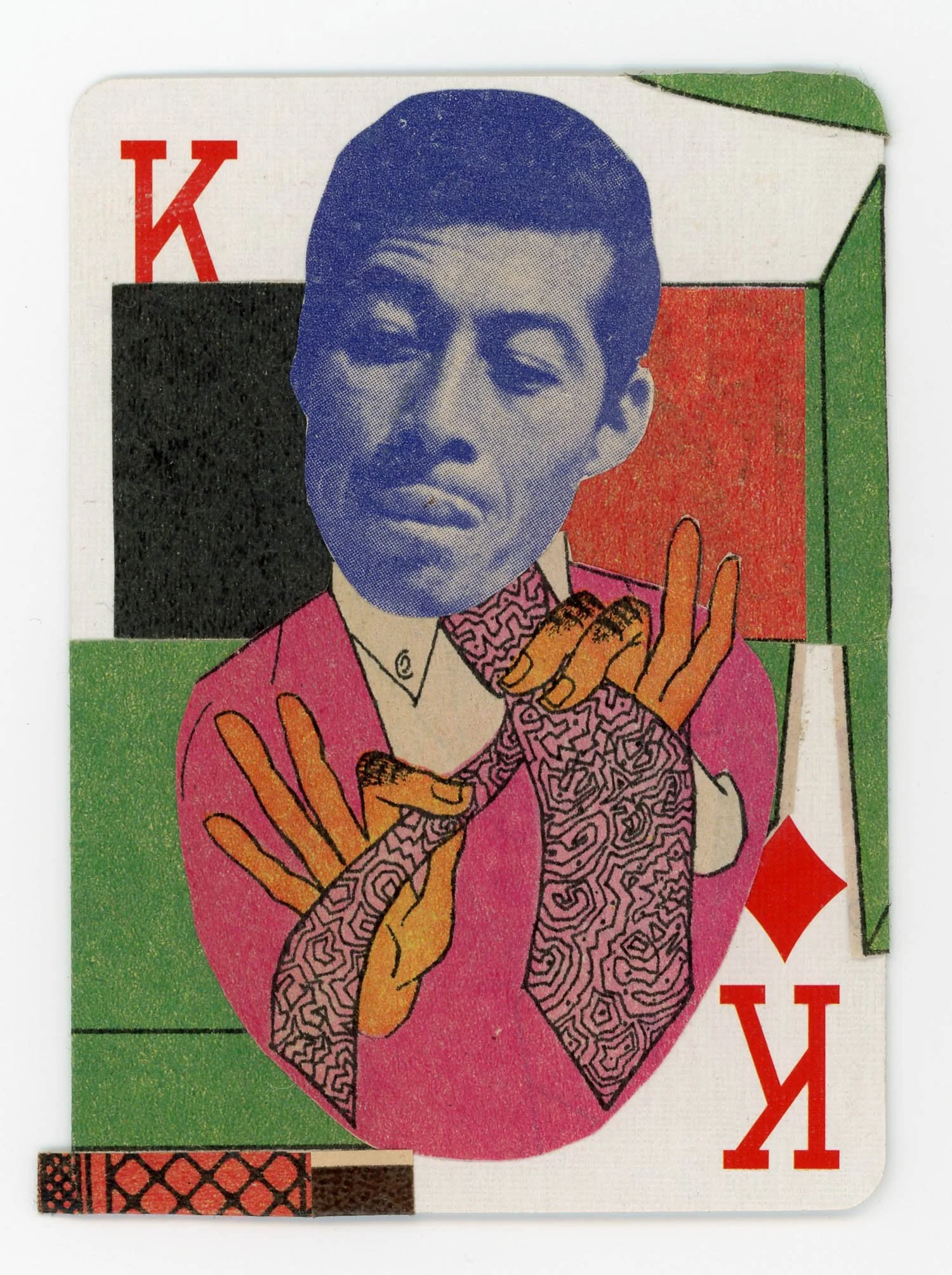

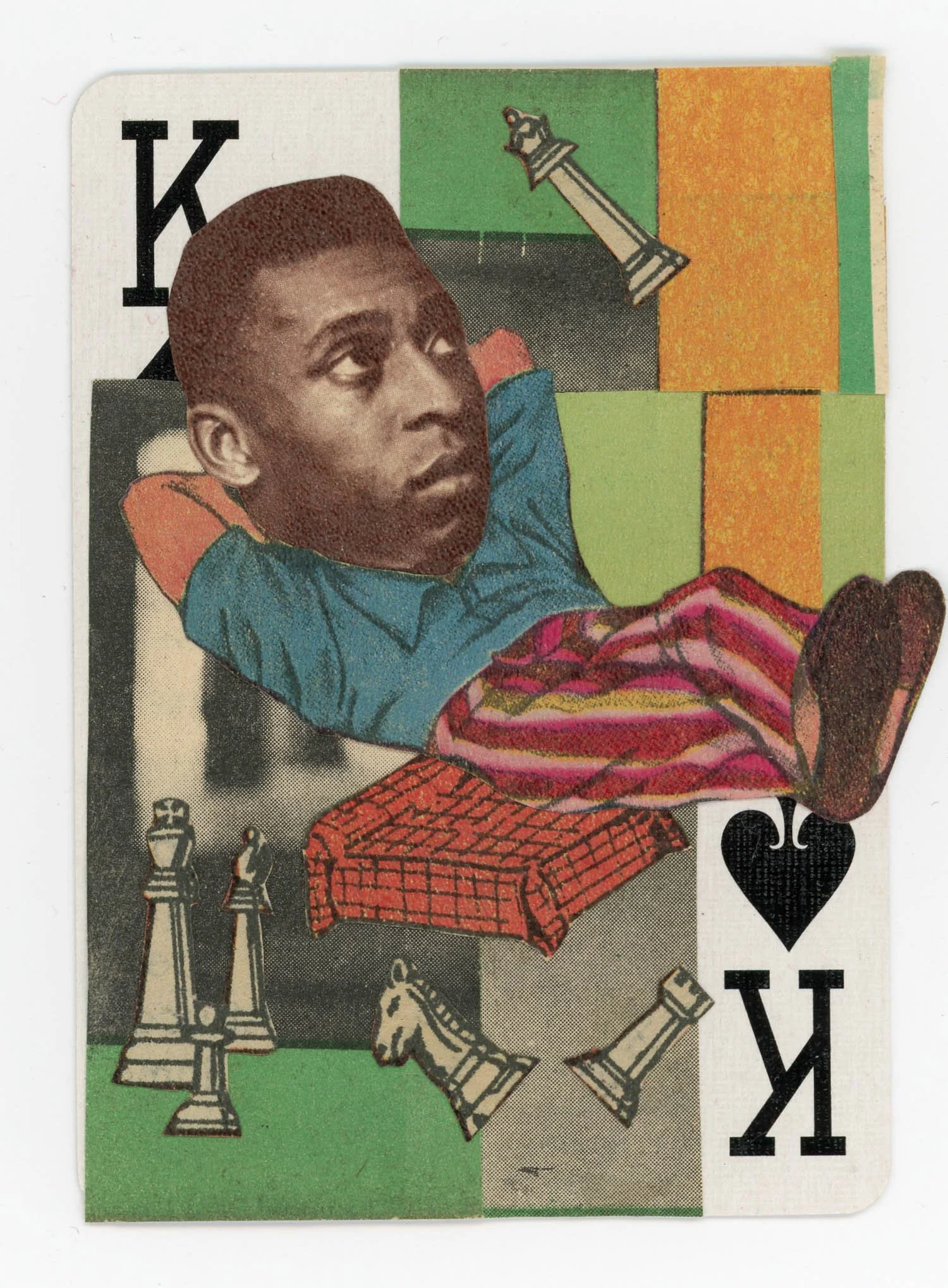
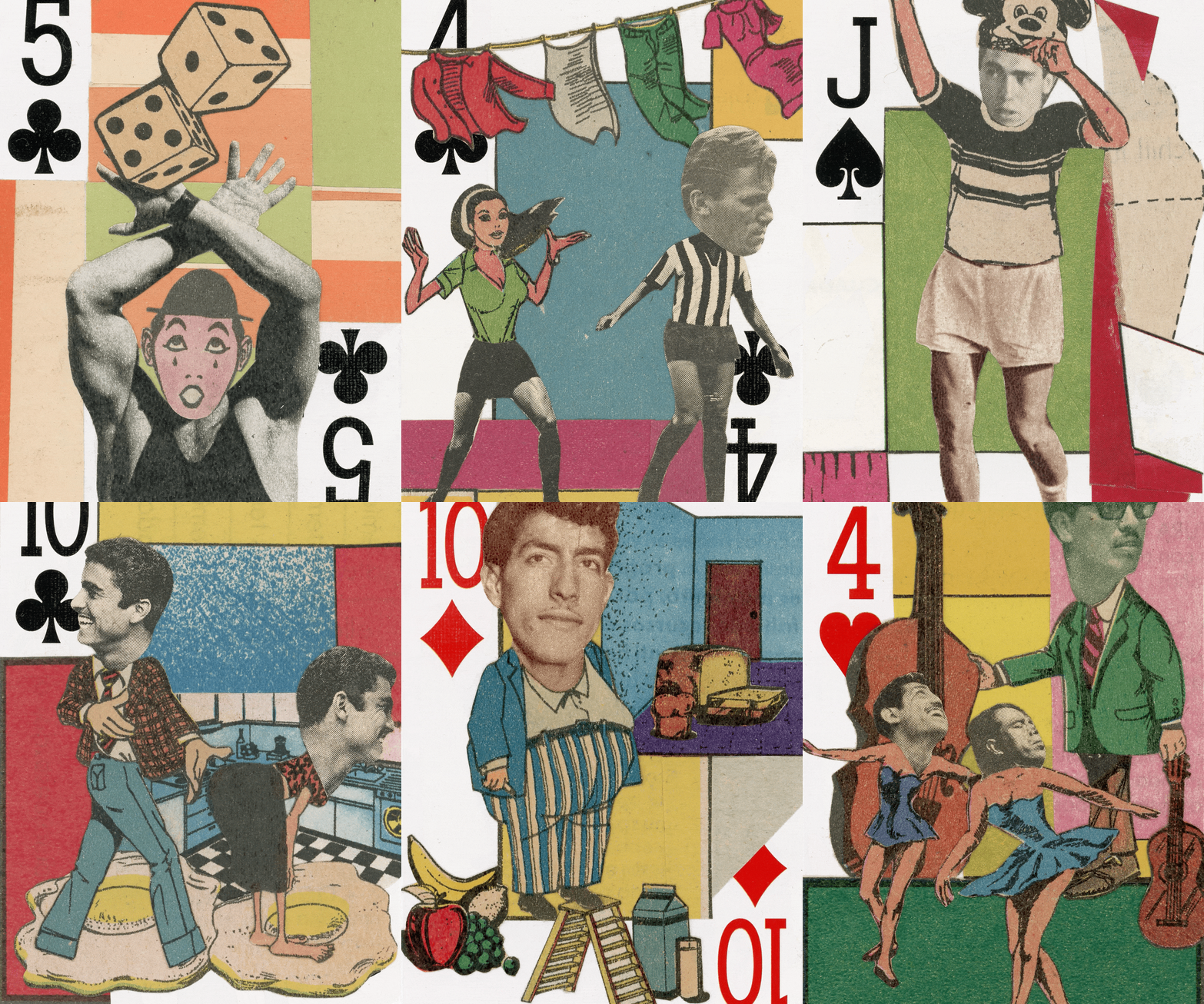


For each of the 54 individual cards, Celina begins with postures and expressions, both from herself and her subjects. First searching for sentiment in her figures, she then re-combs through source material for the colors, textures and objects that would help her build each scene, creating a prep or mise en place, and an assembly area to pull from. The process is a balance of intentionality and chance, with some numbers and suites aligning with specific messaging—like the number seven aligning with religious themes of Catholicism, Queens with feminine power and energy, and of course the heart suite touching on all matters of the heart, good and bad.
The delicacy of decades-old materials and the interwoven reflections and voices of 54 cards come together to form CARTAS, a collective memory and open letter whose message is only fully realized by the viewer.
Pereira's works have been exhibited and acquired for collections domestically and abroad. She has been commissioned for esteemed publications such as The New York Times, The Economist, The Atlantic, Financial Times, and more. ❤
Read more stories