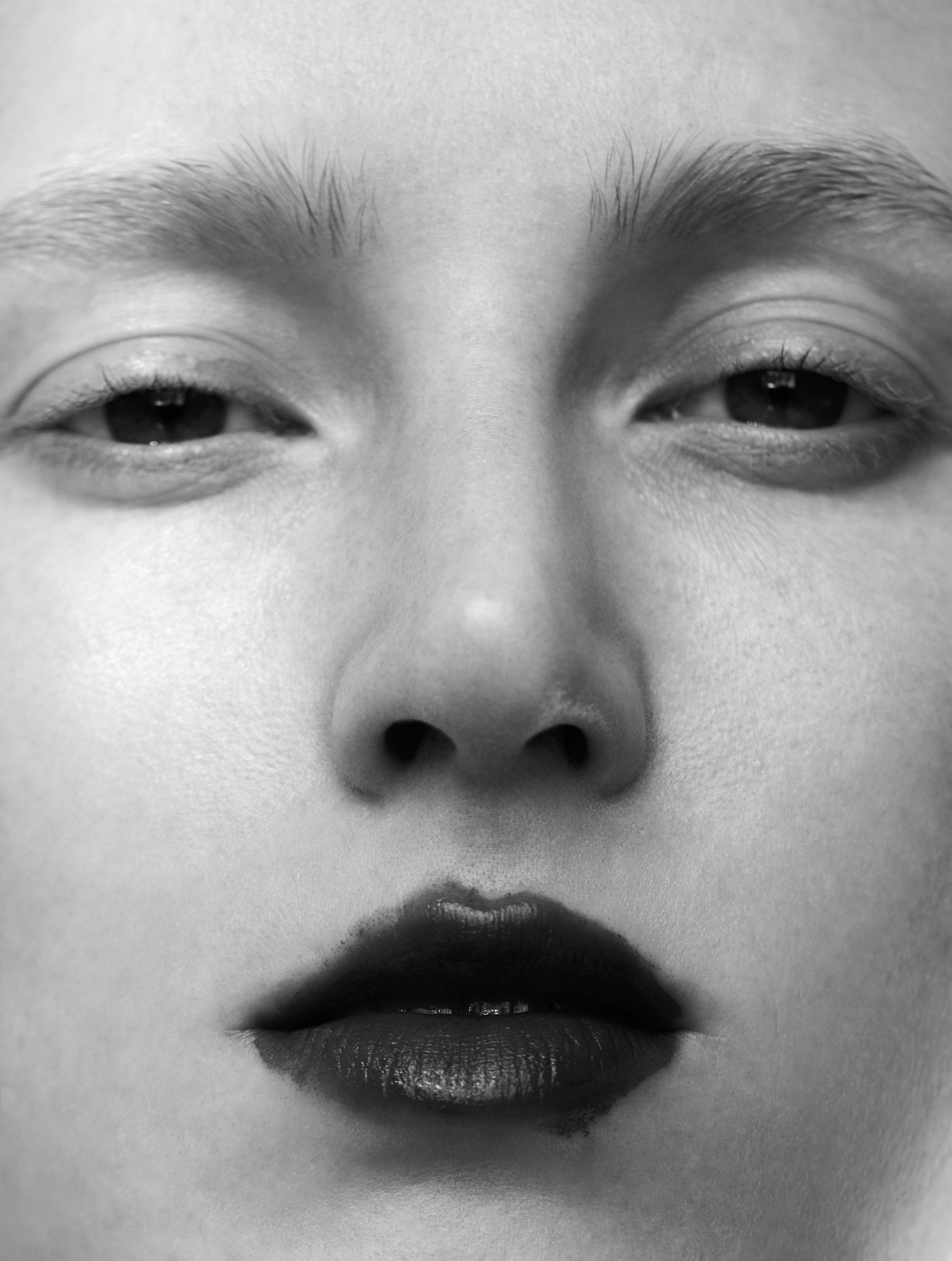
Georgina Treviño: The Space Between
Artist and jeweler Georgina Treviño isn’t interested in choosing sides; her work is what happens within the overlap.
spring 2026
WORDS Rach Albright
PHOTOGRAPHY Lauren Jones
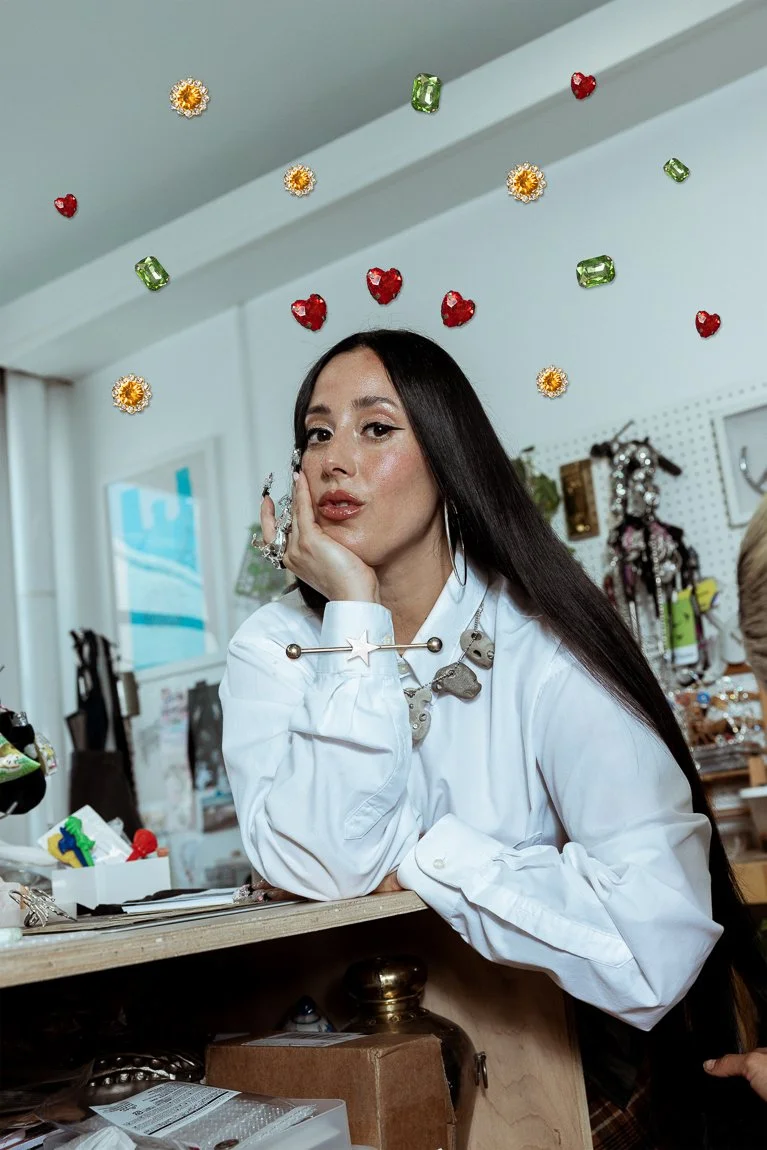
Georgina Treviño exists, quite literally, in between. She was born twice—once in San Diego, once in Tijuana—and has been working in the overlap ever since. “I’m a border person,” she says. “It’s almost like it doesn't matter where I'm at. I'm in places that I need to be when I need to be.”
With two birth certificates to prove it, her origin story is a duality that has come to define not only her identity, but the language of her work: neither fully here nor there, but always both; building in the space where they fail to fully translate.
That elasticity—geographic, cultural, material—runs through everything she makes, a kind of internal logic that resists clean edges, much like her pieces themselves.
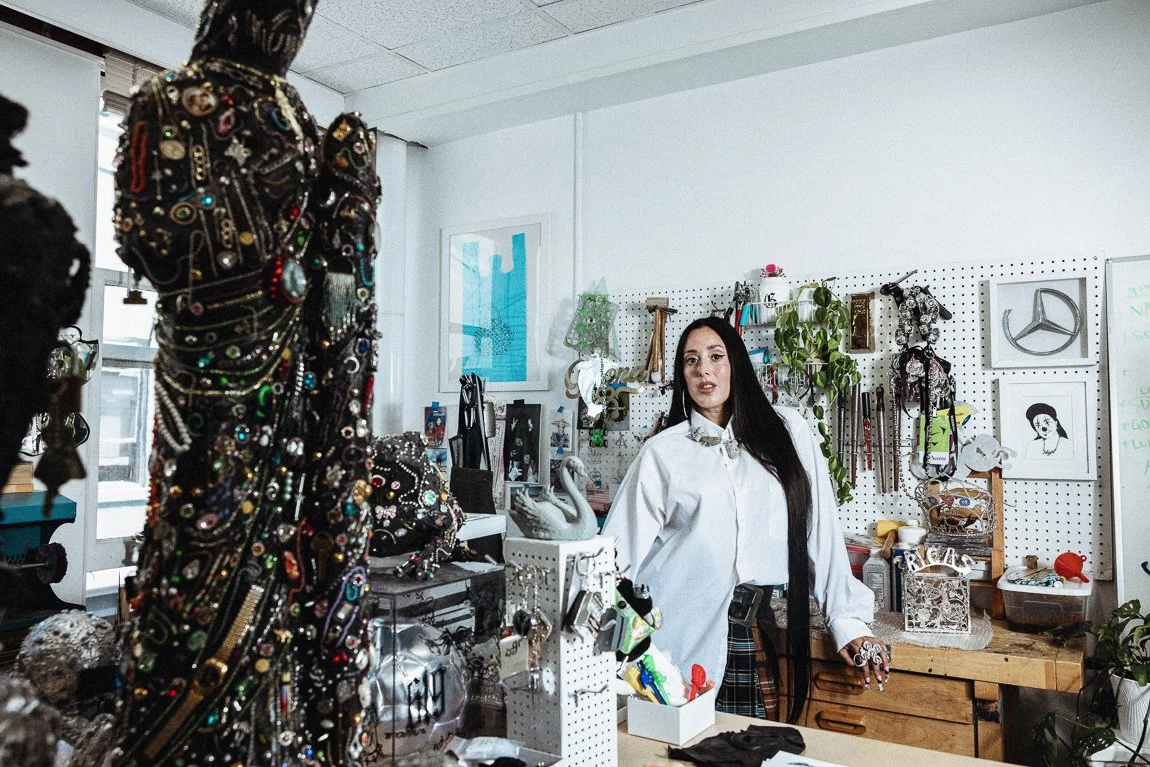
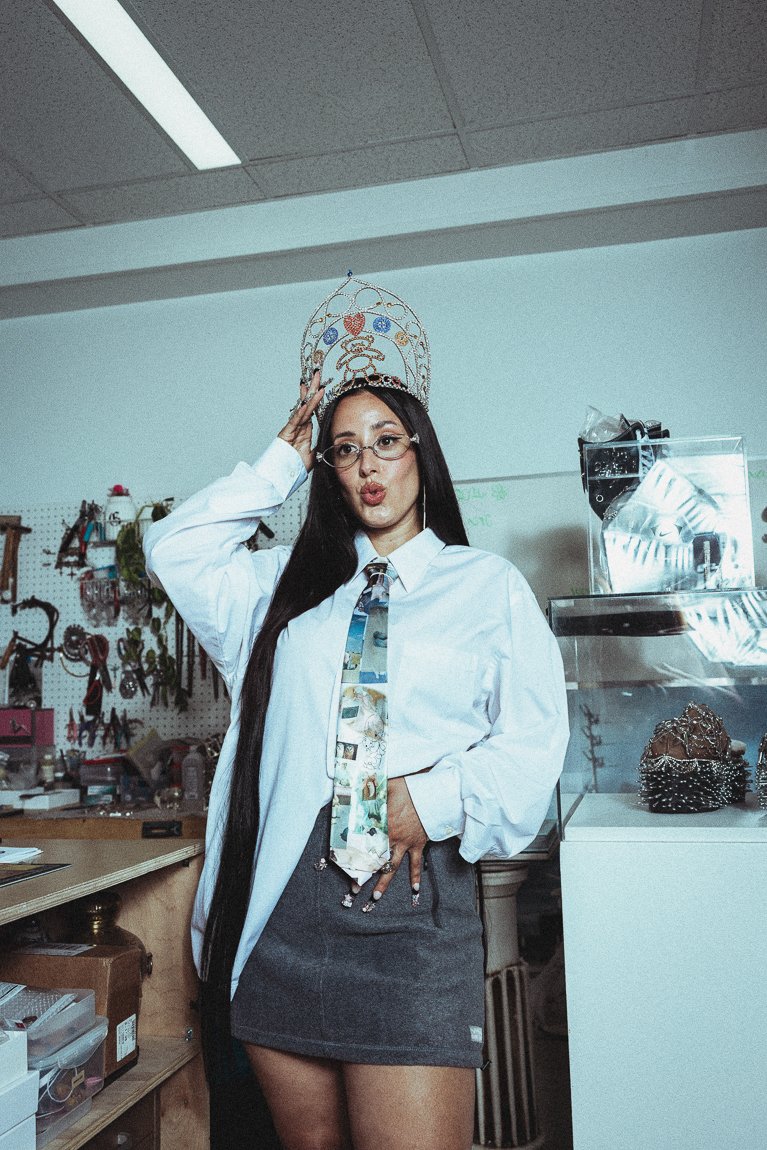
Trained first as an oil painter, Treviño pivoted into metalsmithing, discovering a medium that felt both more immediate and more expansive, more physical, more permissive. Even then, she resisted staying in one lane.
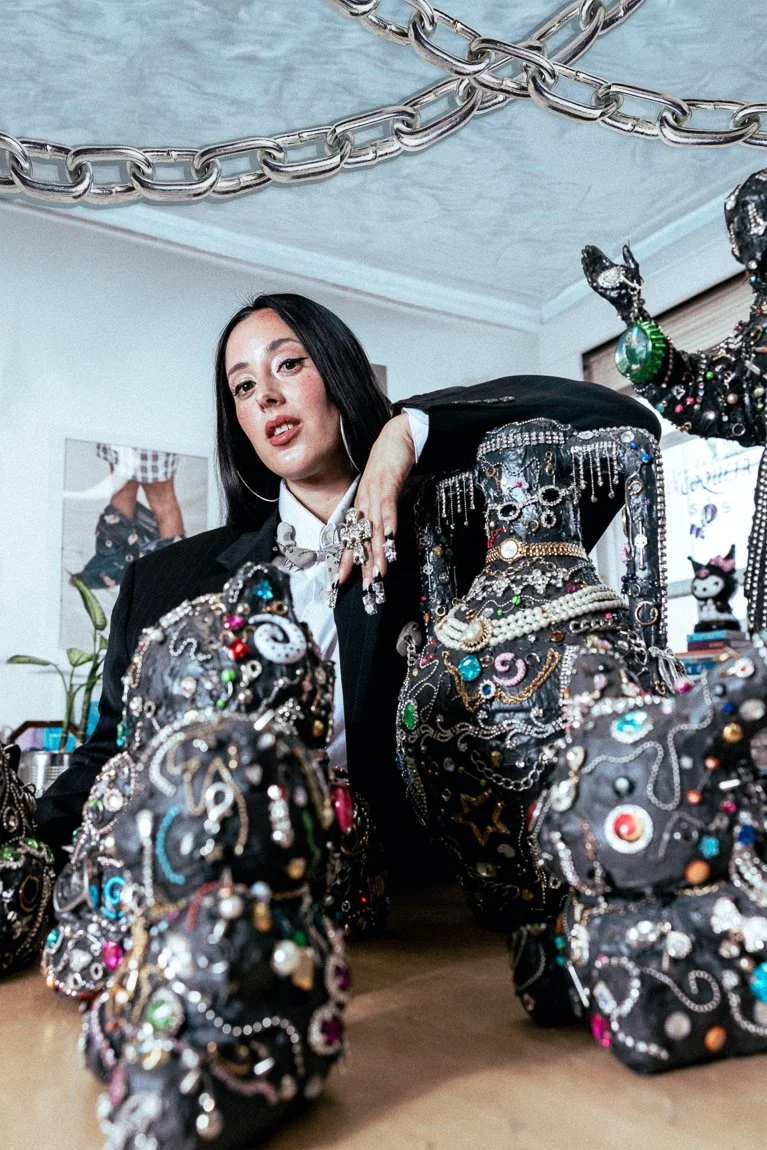
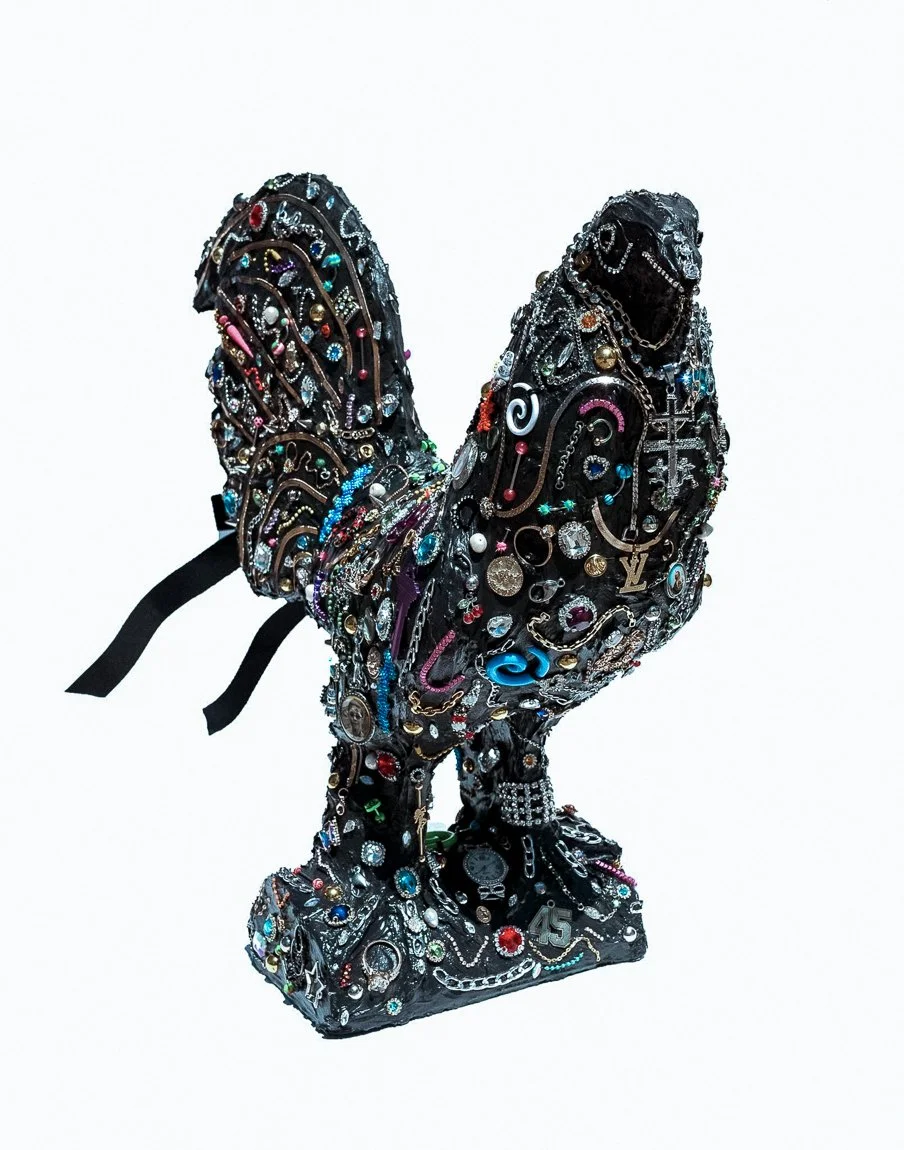
Her pieces often begin with accumulation. She hoards jewelry, everyday objects—even actual trash—and recontextualizes it into dense, maximalist compositions, each piece carrying an archive of past lives. “I think about who owned these objects,” she explains.
“The sculptures hold all those stories and energy.”
Her approach to maximalism isn’t indulgent; it’s archival, stacking origin rather than erasing it. The materials arrive with history; she rearranges the narrative.
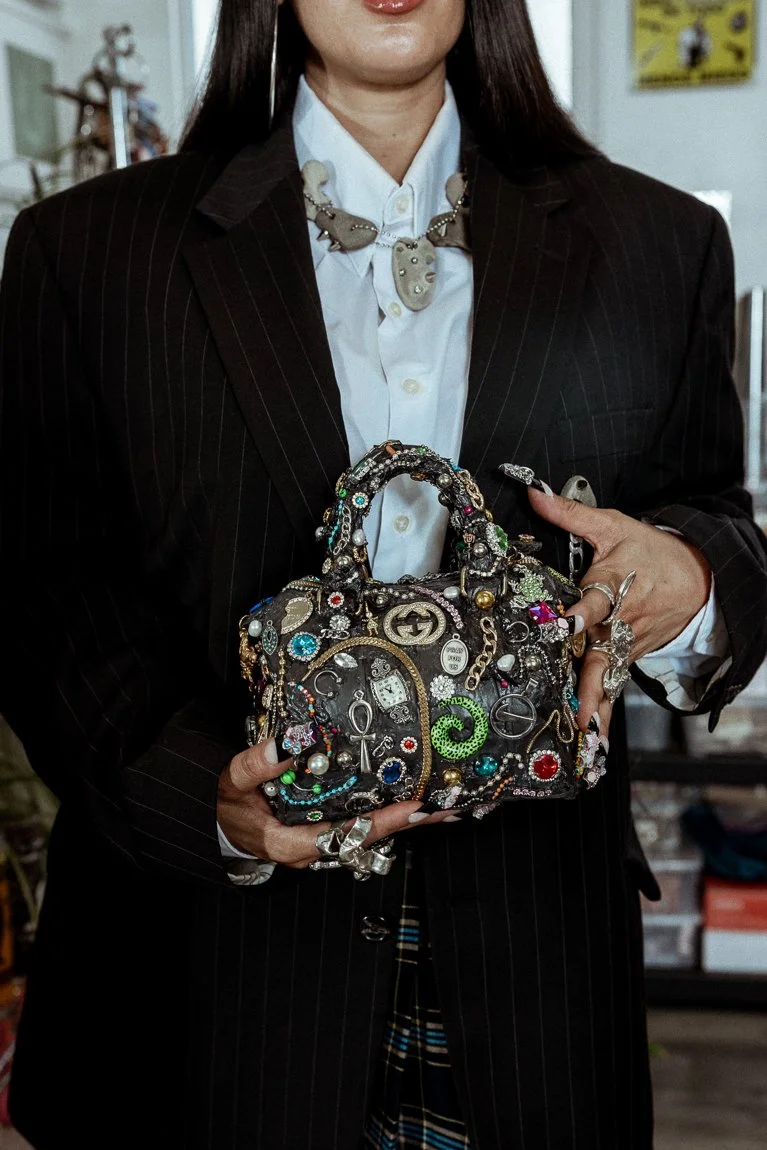
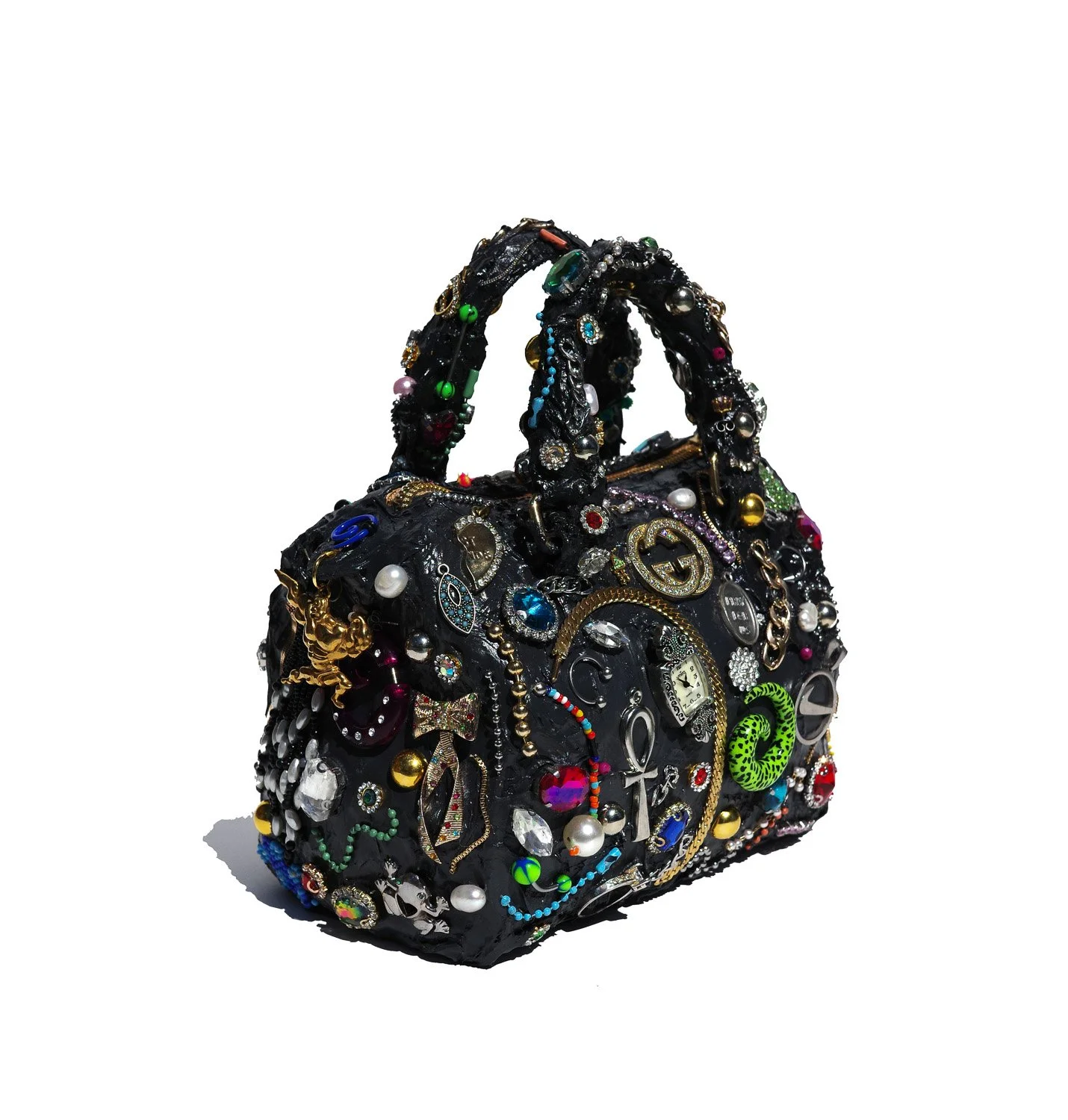
Her pieces feel at once playful and loaded: Hello Kitty meets devotional iconography; Y2K kitsch collides with the visual weight of Catholic ornamentation—high and low collapsing into the same surface, another nod to the duality of her experience.
Raised in a deeply Catholic environment in Mexico, Treviño remains drawn to the drama and excess of religious aesthetics, even as she reinterprets them through a contemporary and irreverent lens. Recently, that interest has begun to surface more explicitly in her work, as she experiments with darker palettes and sculptural forms that echo church interiors and relics, paired with influences from her formative teenage years in early 2000s San Diego—car culture, street culture, a certain kind of gloss—again layering and blurring the lines between borders.
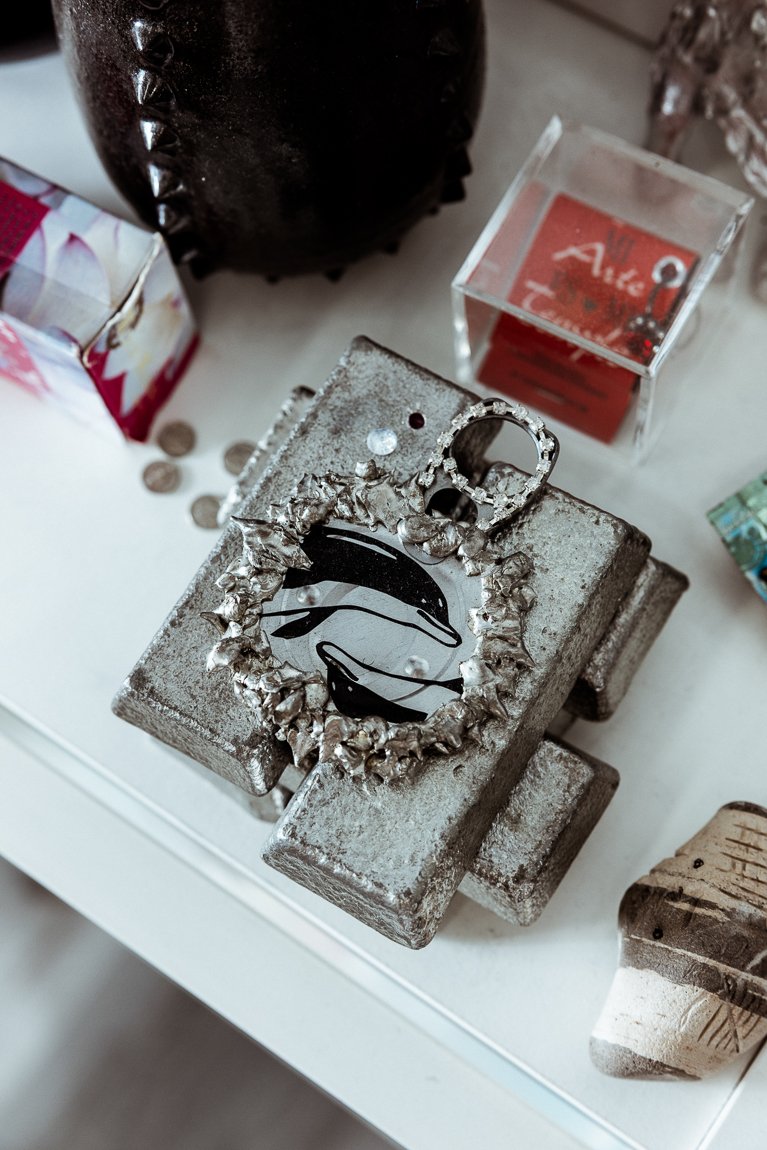
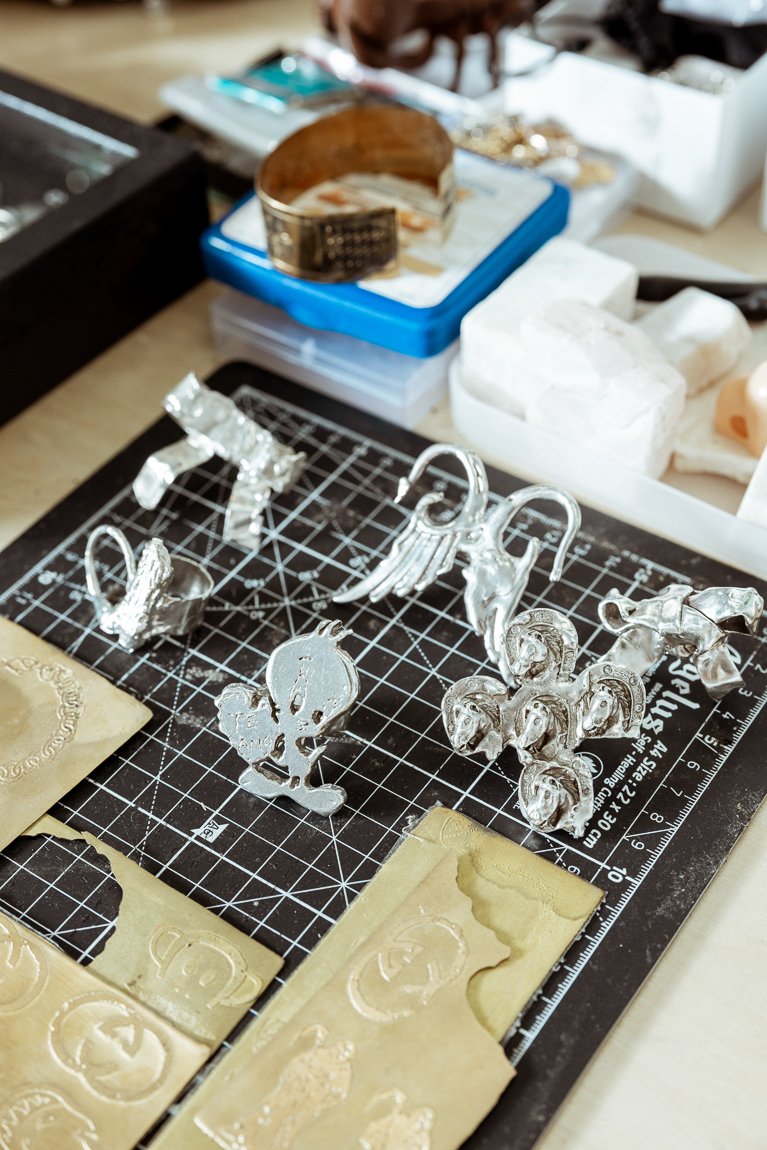
As she’s spent her life moving fluidly between San Diego, Tijuana, Los Angeles and Mexico City, so has her practice—maintaining the logistical complexity of fabricating work across borders, navigating production systems in both countries, and leveraging a kind of chaotic infrastructure that has become integral to her process.
This mobility isn’t just practical; it’s foundational. It allows her to exist within multiple art worlds simultaneously, building a career that doesn’t belong to a single place, but rather the space in between—the overlap, the seam, the part that usually gets edited out.
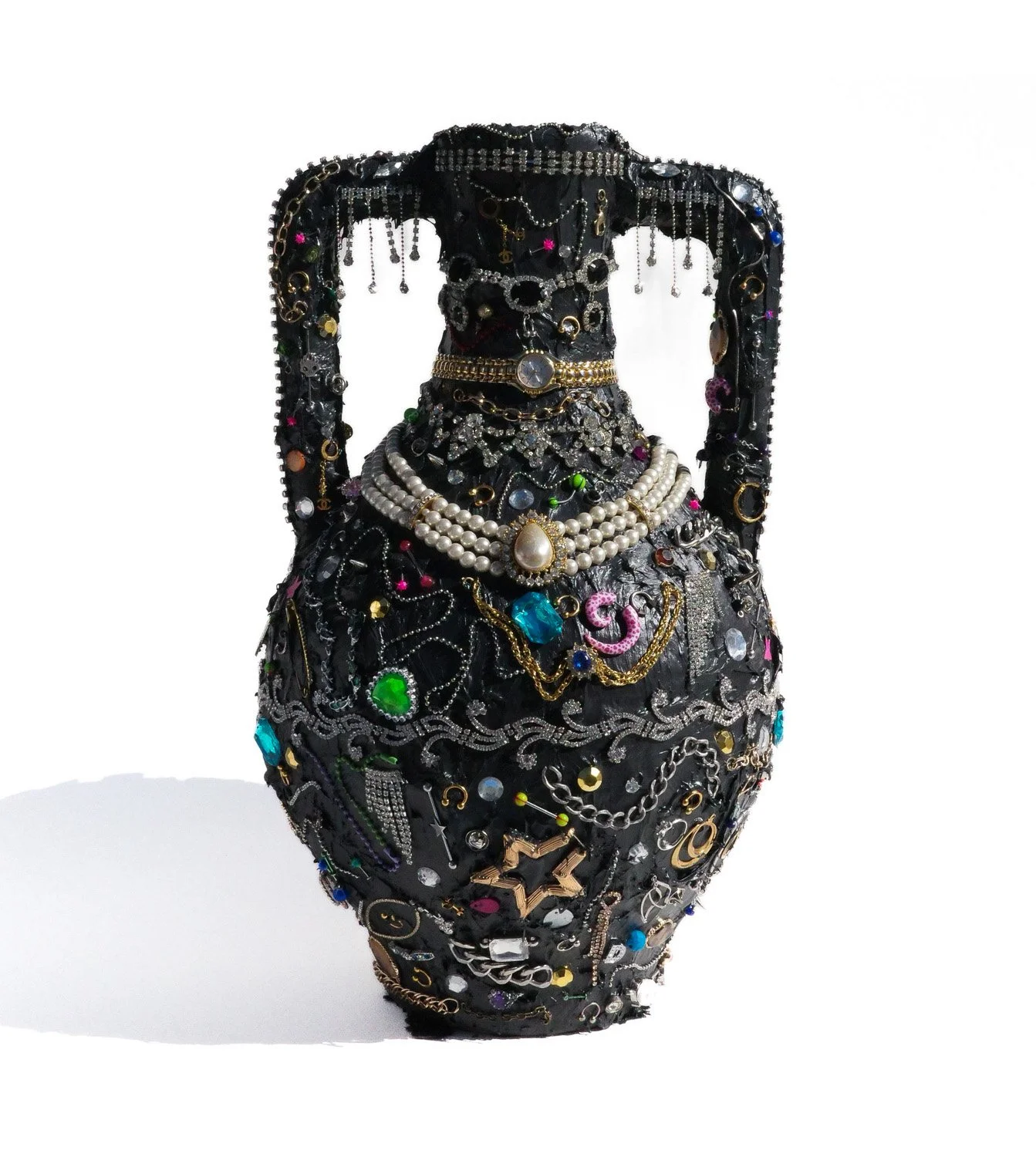
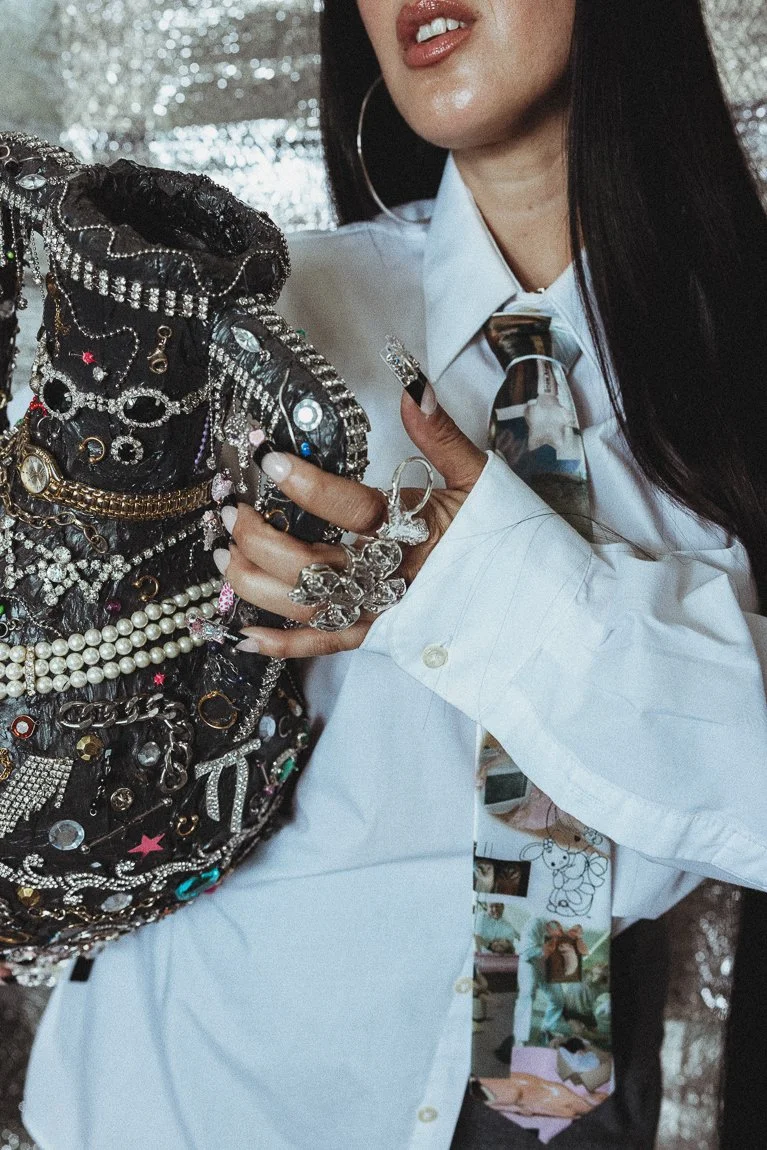
Contemporary jewelry has long been sidelined as craft; for her, it’s an entry point into something larger: sculpture, installation, and object-making that acts as a storytelling device over pure adornment. Straddling these worlds, merging the borders between handicraft, fashion and high art positions her work as not one thing—but all of the above; refusing to stay contained.
In Mexico City, this same instinct extends into her role as educator, mentoring students across disciplines—some pursuing contemporary jewelry, others fashion or design—guiding them not toward a fixed path but toward discovering their own. Her approach mirrors her practice: fluid, responsive, and deeply invested in possibility.
“I don’t do it for the money,” she says. “I do it because I feel like I have to.”
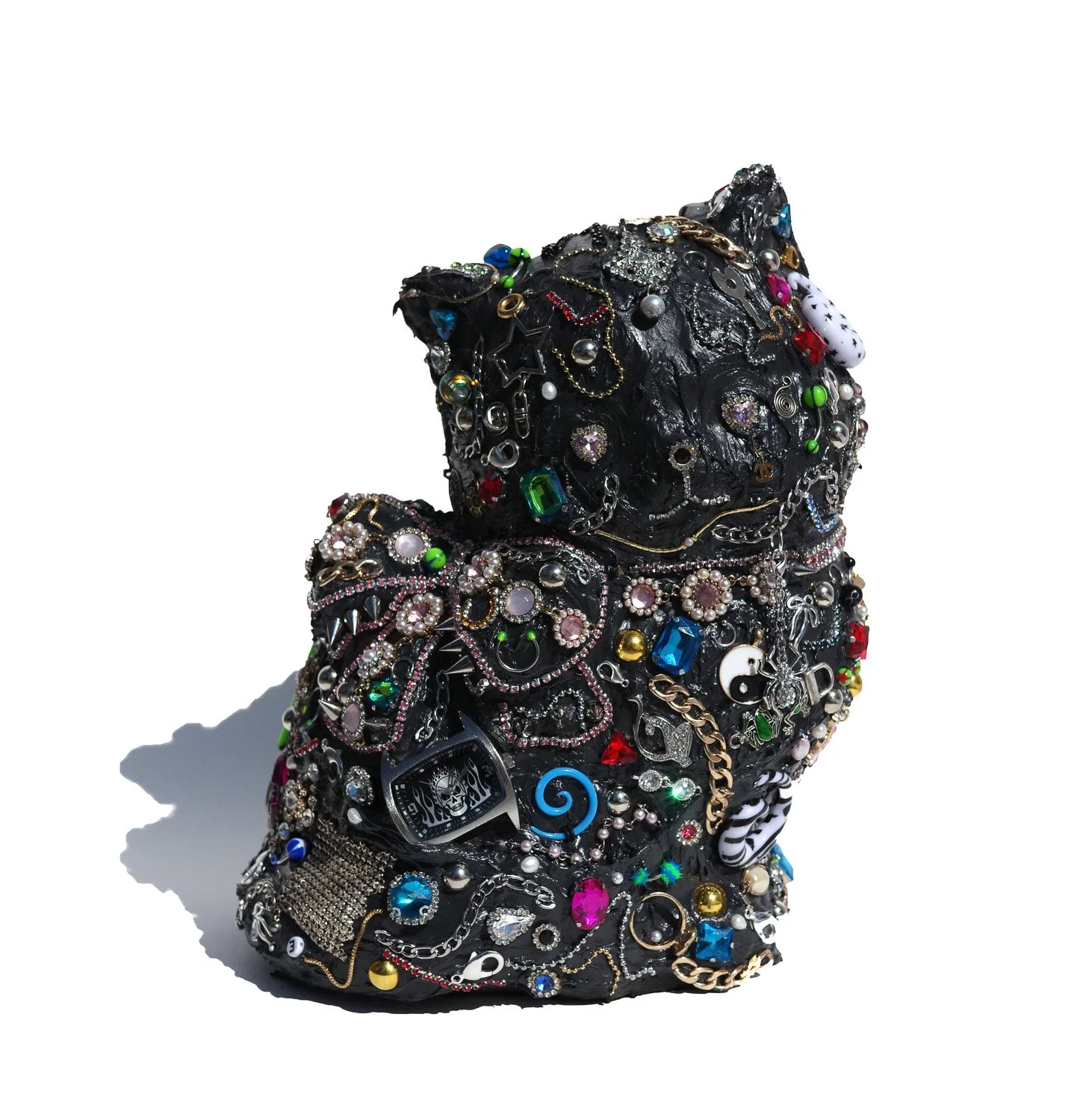
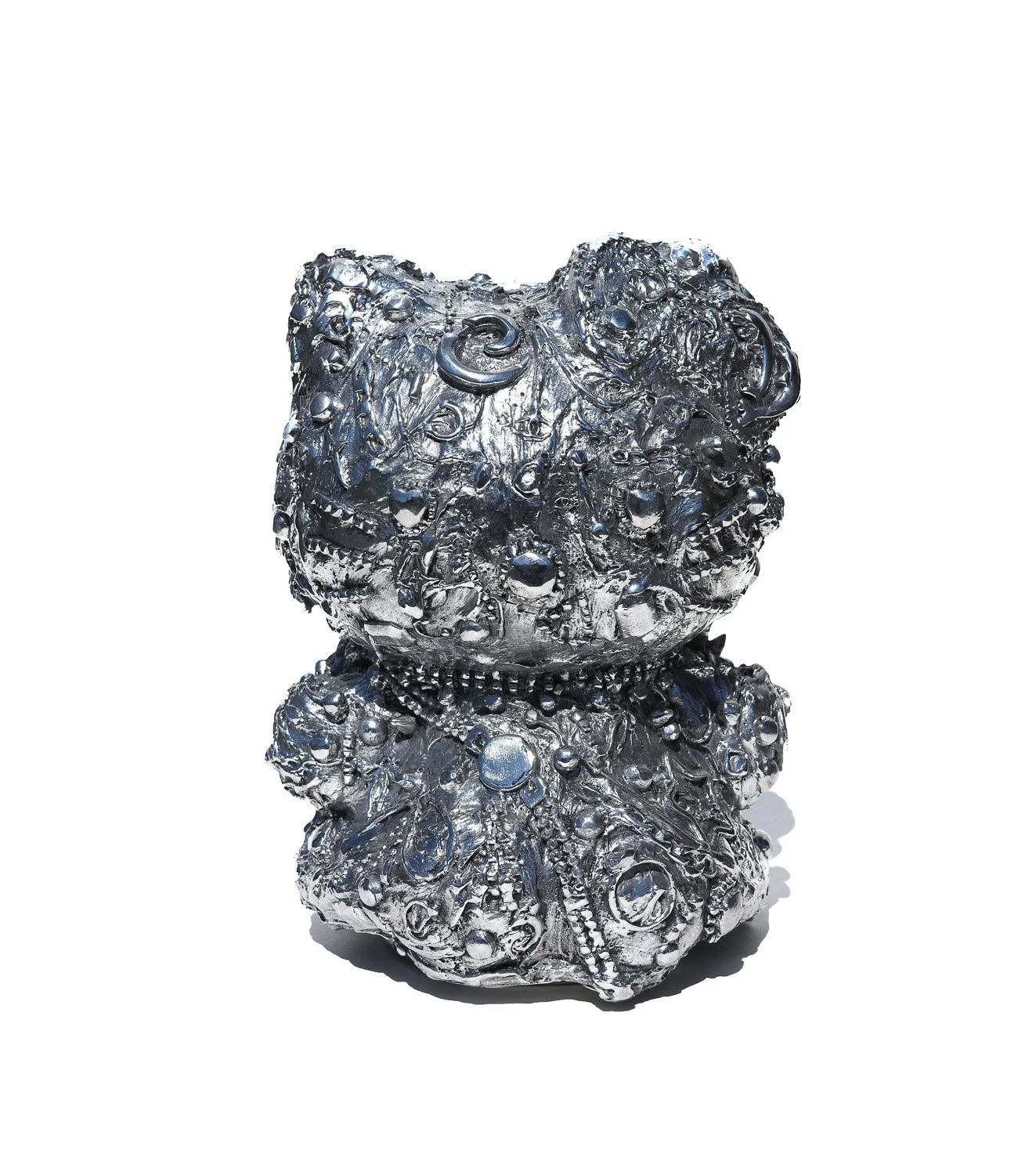
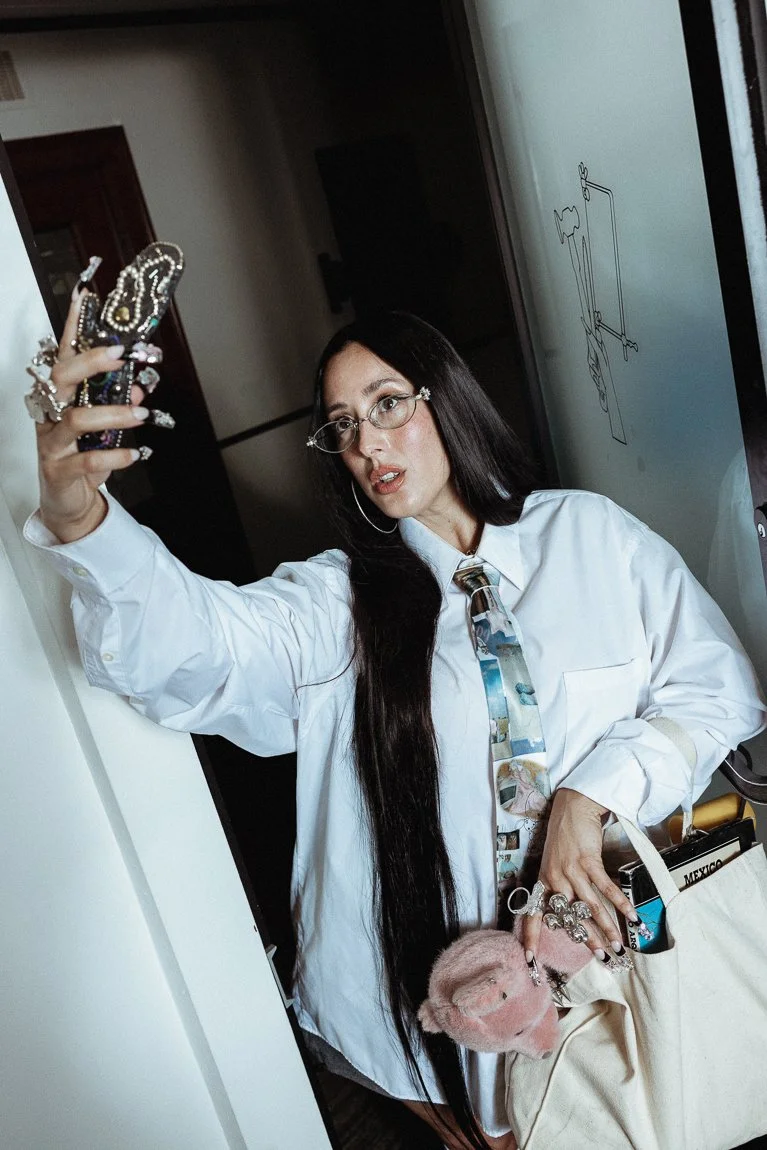
Showing in this week’s NADA New York with San Juan-based gallery EMBAJADA, Treviño’s sculptures directly reference a border life—nameplate jewelry, politically-driven and religious souvenirs sold along the US-Mexico border, Y2K memorabilia, hoarded and found objects—now cast in metal, trapping and recontextualizing these memories into something more permanent.
There’s a sense, throughout her work and her life, of constant motion—of saying yes, of making quickly, of following instinct before overthinking can catch up.
“As long as I have the idea, I make it,” she says; speed is part of the structure.
And still, the core tension remains. Treviño doesn’t resolve dualities—she builds within them. Art and craft; Mexico and the U.S.; precious and discarded; chaos and control. Her work thrives in the in-between, where she collapses categories and allows new forms to emerge.
STORY CREDITS
FEATURING Georgina Trevino, HAIR Joycelyn Vega, NAILS Nikki Cardenas, PRODUCER Kristin Steusloff, PHOTO EDITOR Brittney Najar, LOCATION Georgina Trevino Contemporary Jewelry Studio
Read more stories