WHEN I FIRST MET AROOJ AFTAB in the backyard of Bed Stuy, Brooklyn, bar Lovers Rock five years ago, I was surprised. I had heard Vulture Prince, a gorgeous, sweeping record that pulled from ancient Sufi poetry and soundtracked it with harp, strings, and synth. I imagined that she might be dramatic, grandiose, and a little woo-woo, the way so many poets are, the way the music made me feel. The woman I met was instead sharp, erudite, absolutely no bullshit.
Coexisting with that precision and self-awareness is an astute, winking sense of humor, and a profound love of life. As serious and exacting as she is, Arooj Aftab is also someone who sees the world as a place full of wonder, who can tell a story about an old friendship or a chance encounter with a simmering sense of awe. It is her precision and virtuosity that establish the scaffolding of her work: the patience, the expert use of silence, the crescendos that build and build until they feel like answers to life’s greatest questions. But it’s Aftab’s humor and her romantic worldview that really bring her work to life. You hear it in the cascading, trilling flute and topsy-turvy harp glissandos on “Last Night Reprise.” It’s there in her most serious songs too: “Mohabbat,” a swelling, profound song about heartache, is proof that grief is love with nowhere to go.
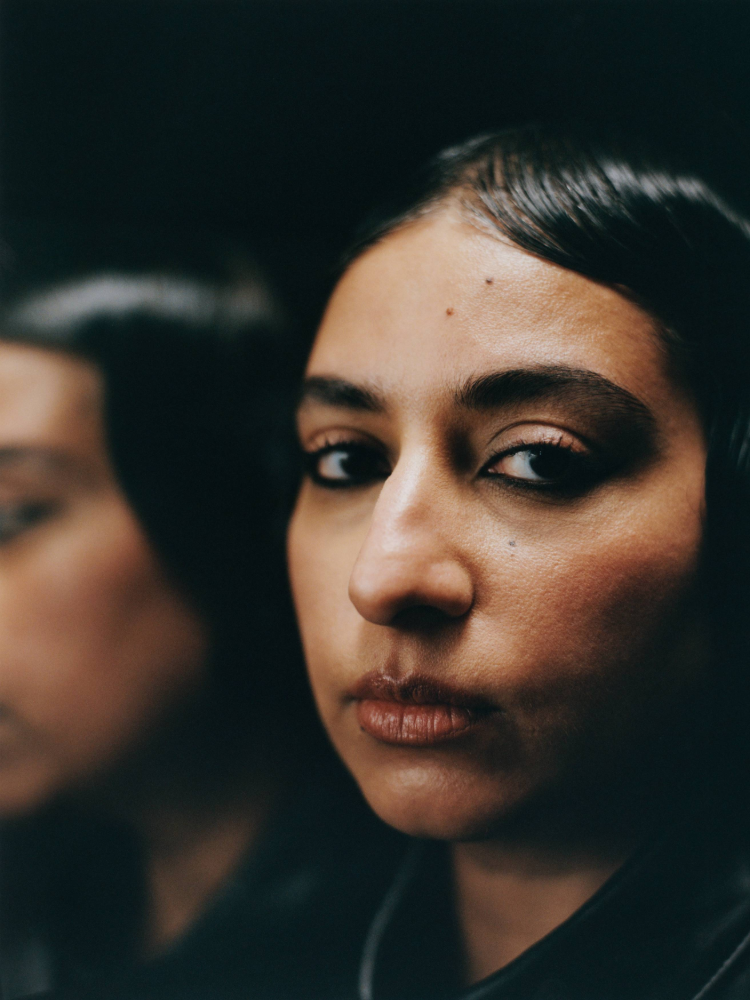
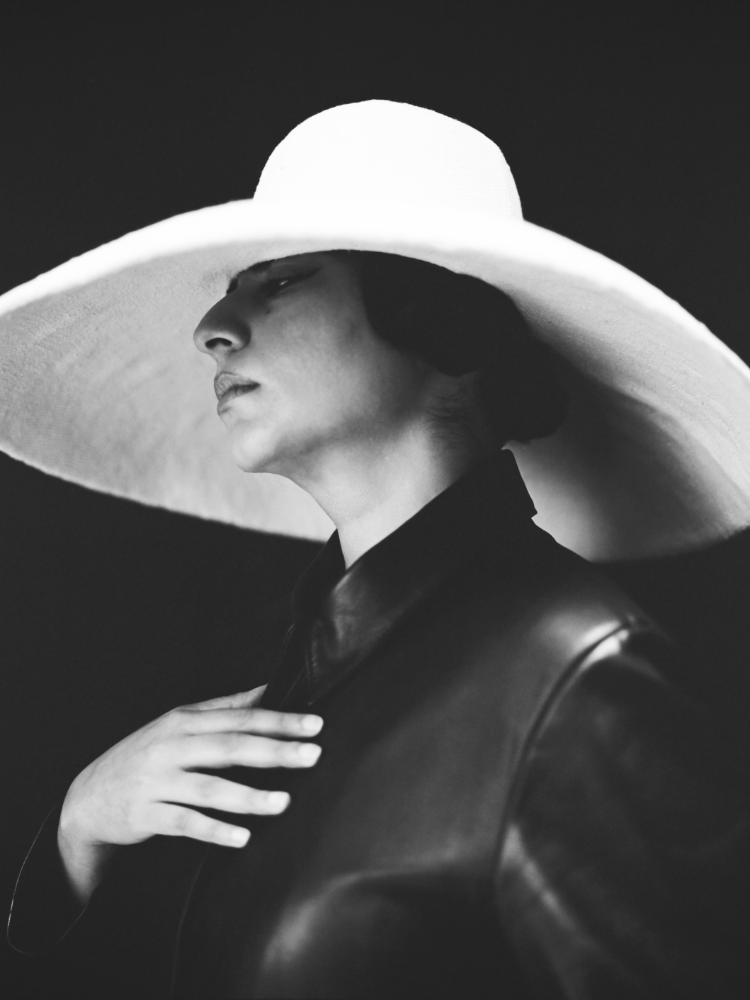
LEATHER COAT Nour Hammour
When we meet, a few blocks away from where Lovers Rock once stood, Aftab is fresh-faced in a navy blue and white striped sweater; long, unpolished nails; and hair worn in a bun. She orders both of us glasses of dry white wine, and pulls out a light blue pack of Parliament cigarettes and a matching blue lighter.
She’s deep in the process of writing her new album: immersing herself in the energy of New York City, meeting with artists and friends who inspire her, trusting the instincts and emotional awareness she’s built over the course of her career and also letting that unabiding sense of curiosity and passion guide her. “Whether [an experience] is happy or sad, the dominant thread, for me, is that it’s romantic,” she says. “Even grief is romantic, even loss, even the darkest, ugliest things can be viewed in a lens of this irrational, stupid idea that it’s romantic. There’s something so hopeful about that.”
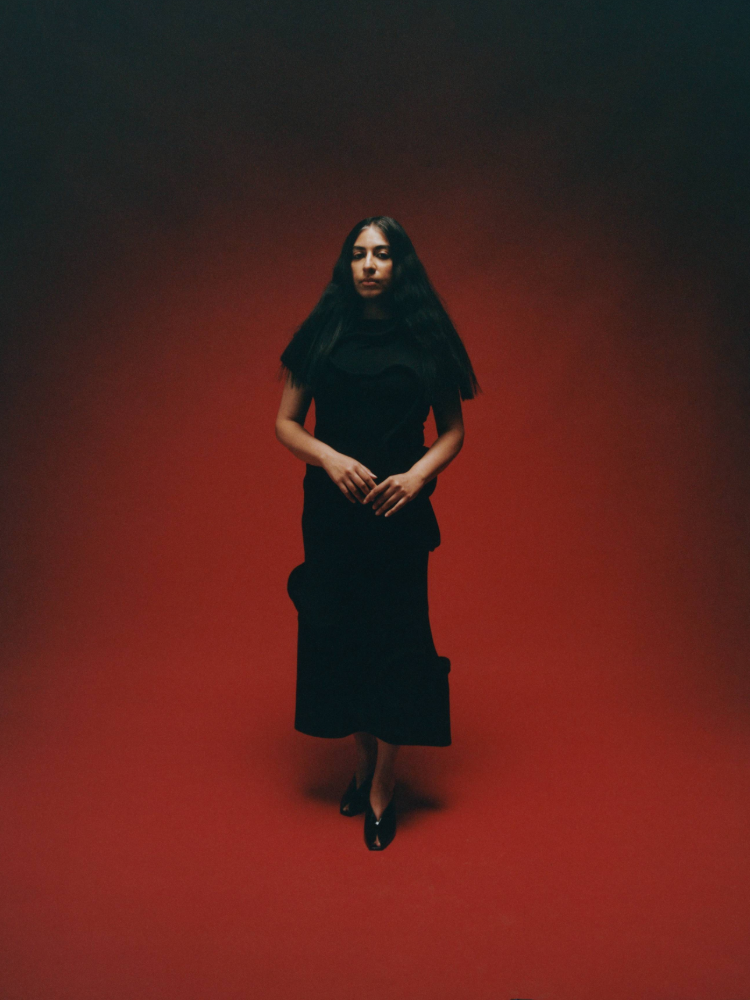
TOP & SKIRT Melitta Baumeister / SHOES Ferragamo
“I’ve reached a point in my musicianship where I really trust myself.”
VRINDA JAGOTA: There’s a real sense of curiosity to your work, a drive to keep making a new sound. What motivates that?
AROOJ AFTAB: My question to myself is always, What can I do next? These songs are in a form right now that lets me prove [a new] concept to myself. I’m seeing what they will be like if they’re more maximalist rather than me being very choosy about who plays what and when. I have received the satisfaction of doing that and now I’m moving past it.
VJ: How are you moving past your earlier sounds?
AA: I’ve reached a point in my musicianship where I really trust myself. I’m inviting in new producers and new musicians to play on the record, and using sounds that I’ve loved for a long time, like lots of drums and rhythms and synthesizers that are outside the jazz idiom. I’m being more playful. In short, I’m like, Pile it on. Fuck it. Let’s see what happens. I’m curious and I’m unafraid. And at the end of it all, I know what I don’t want it to sound like.
VJ: Tell me about your songwriting process.
AA: I do anything and everything to get to the song. Voice notes, paper notes, going to a show. It’s three chords badly played on a guitar. It’s telling somebody whose playing you really love, “Can you play me a C, a G, and an A minor chord? Play it the way you play it, I just want to hear it.”
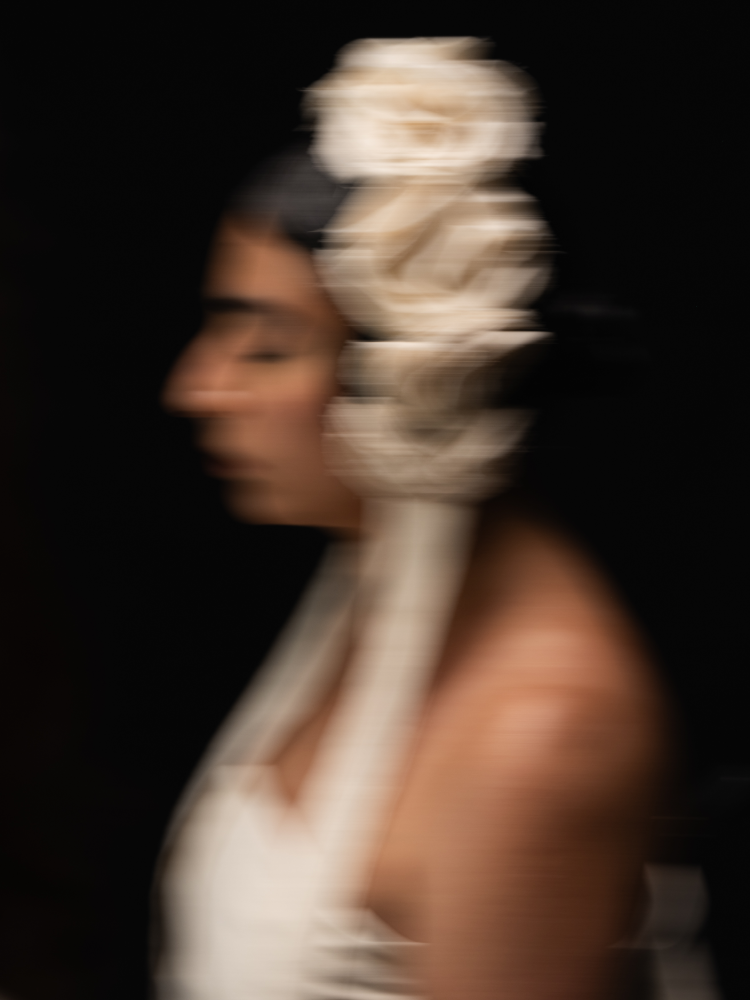
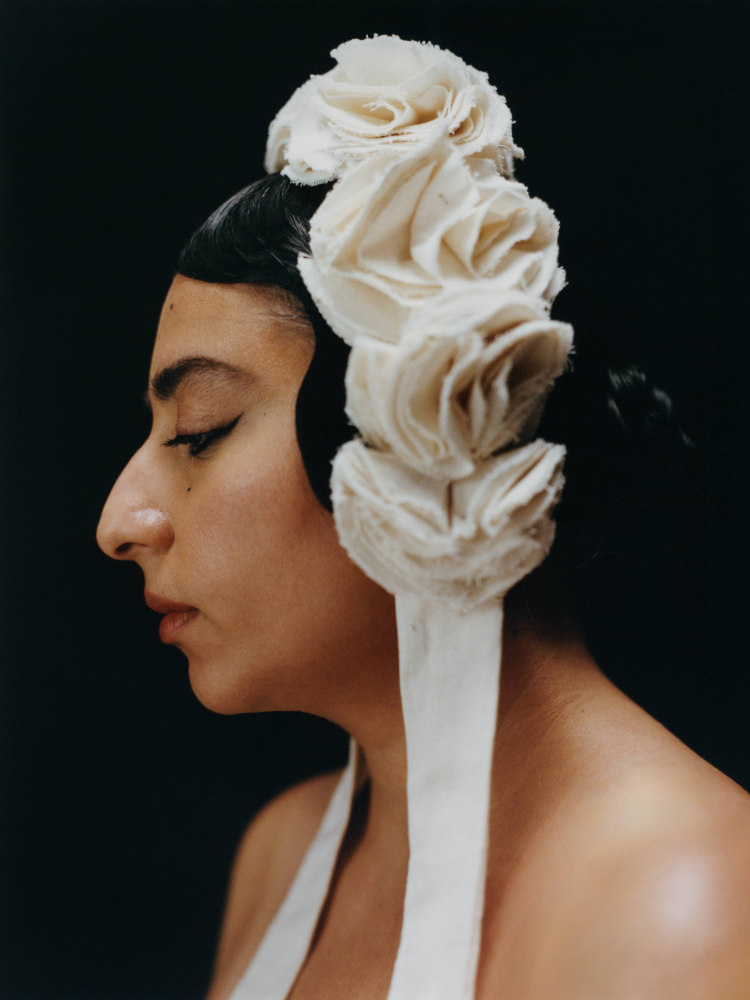
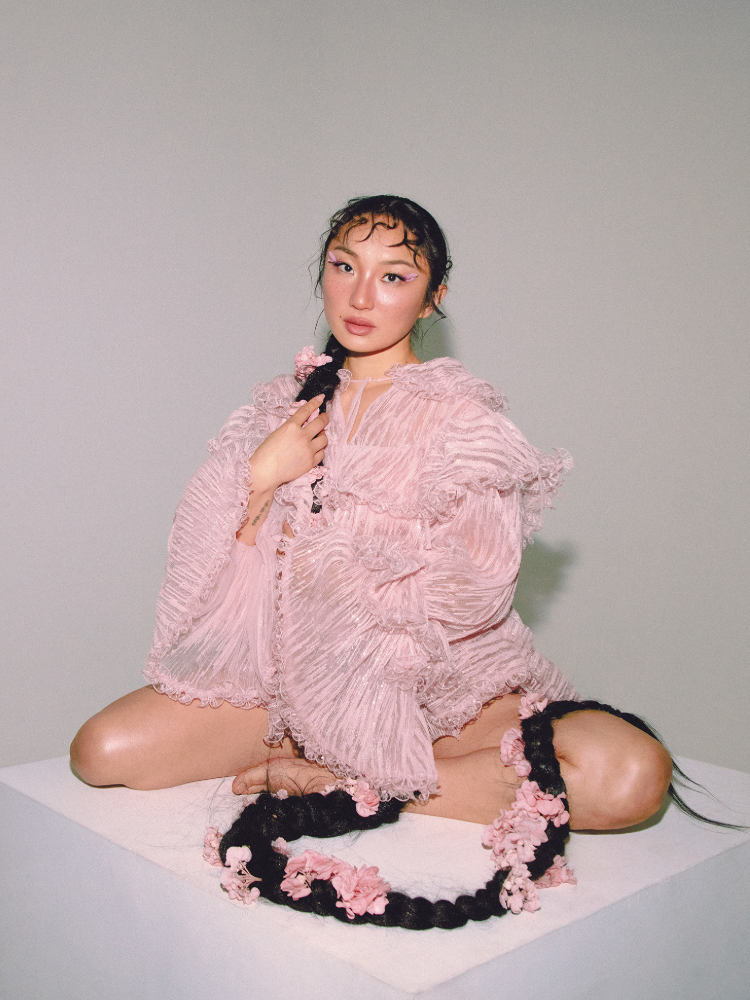
HEADPIECE Customized by Lorena Maza
“I do anything and everything to get to the song. Voice notes, paper notes, going to a show.”
VJ: You’ve said that your work is a deep reflection of whatever you’re feeling at the time. How do you foster that self-knowledge?
AA: If somebody asks me to do a song for a TV show or a score for a movie, I can remove myself and do that. I can get into that character. But then when it’s my solo project, I really need to sit with myself and be like, How am I doing? The last five years since Vulture Prince could have just been a blur. I toured and learned a lot. I did shows in different spaces with the BBC Symphony Orchestra and the Metropole Orkest. I did some teaching residencies. But I’ve been writing prose, which I haven’t done in a long time. I journaled the tour and my travels, which created a great resource for me to understand this time. These little practices are so important. I’ve been playing guitar again because it’s like, why should I stop learning? Who the fuck do I think I am? You have to keep doing. And you have to do tangible things like writing your life down or playing the guitar.
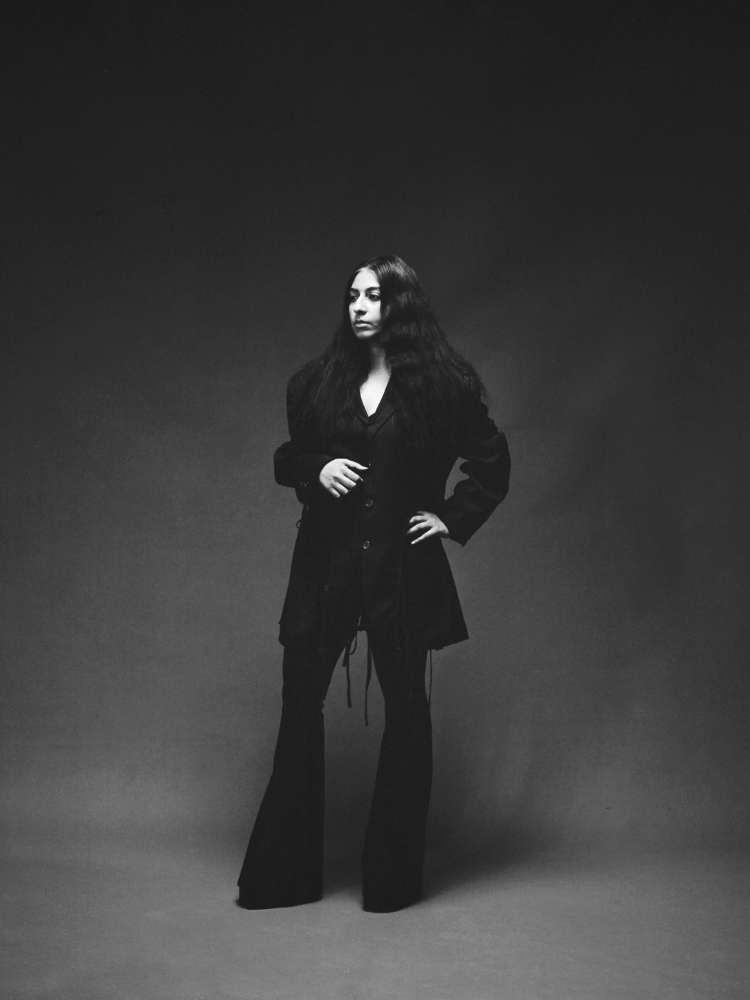
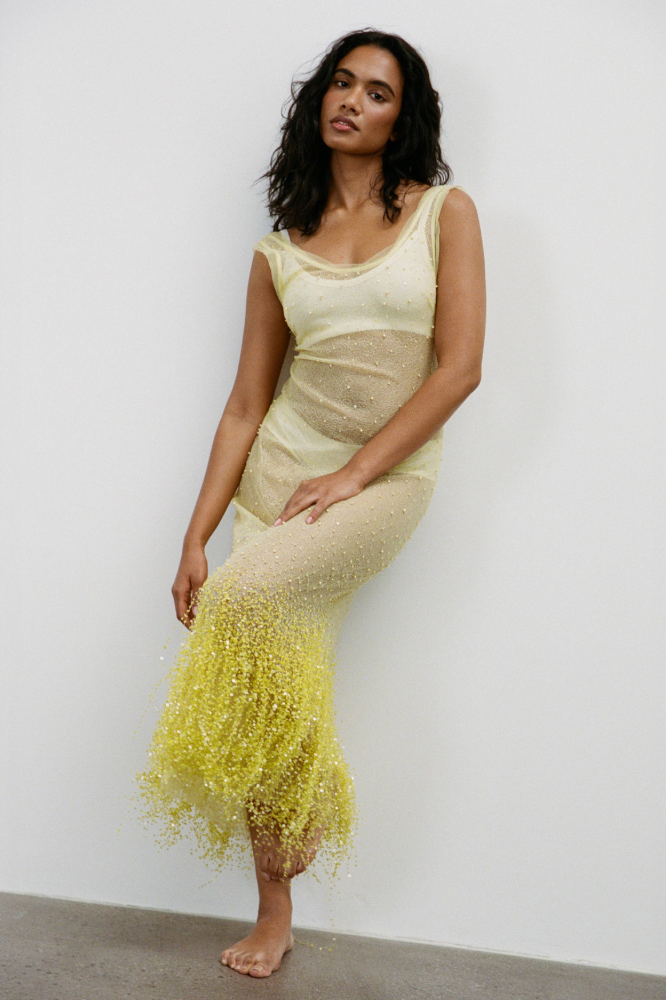
BLAZER Benzo / PANTS Saint Laurent / SHOES Stella McCartney
“I’ve never experienced this degree of mental noise and despair that the world is ending.”
VJ: I imagine being on tour, away from your home, you feel a bit removed from physical reality.
AA: I’ve been going into songwriting sessions with three notebooks and pencil and sharpeners. It feels dumb to say it, but it really matters to be writing and erasing and scratching stuff out, and to be like ‘Where is that green notebook?’ I’ve also been wanting to remind myself of how I started doing this and going back to those practices. Jeff Tweedy said this amazing thing that he heard from Linda Berry: ‘If you're stuck on a lyric and you don't know what to do, just imagine yourself in your old bedroom or like in a place of creativity. Just stay there for a second and it will come.’
The default way of recording our ideas is so digital, and everything else—your family, your friends, your whole marketing team, the whole industry—is also on your phone. You will open it up and see articles about all the mergers that are happening, what Spotify is doing [to the industry and to artists] and you’re like, “We are so cooked.” I’ve never experienced this degree of mental noise and despair that the world is ending. It’s important to find these little ways to not let doom take over. I have been separating the two, which has given me a sliver of clarity and less anxiety.
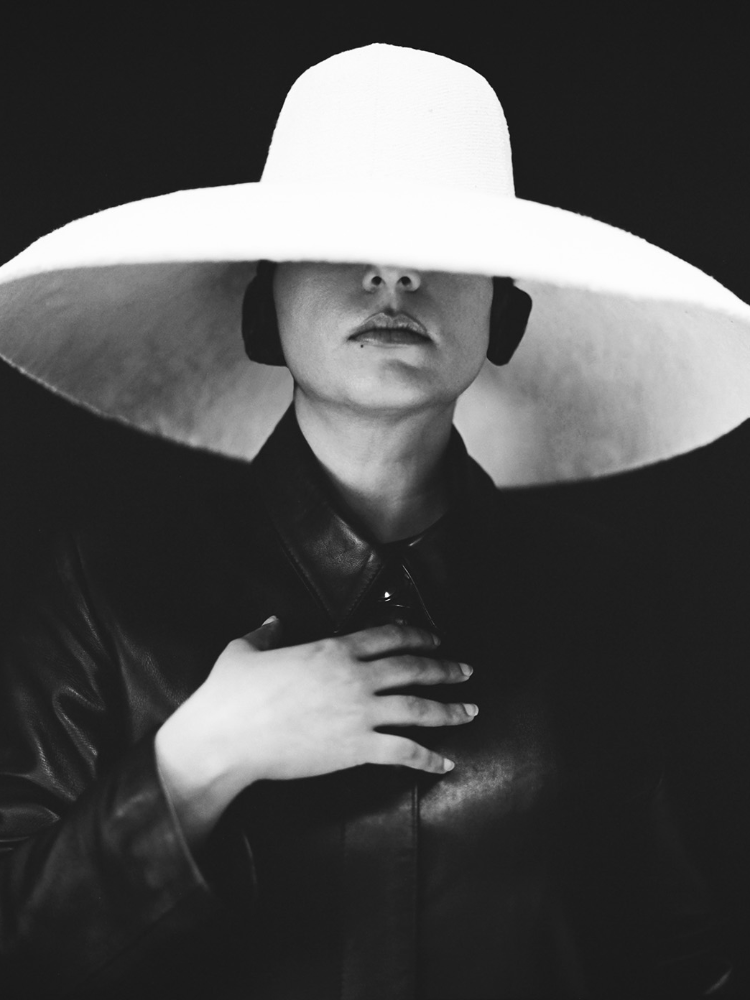
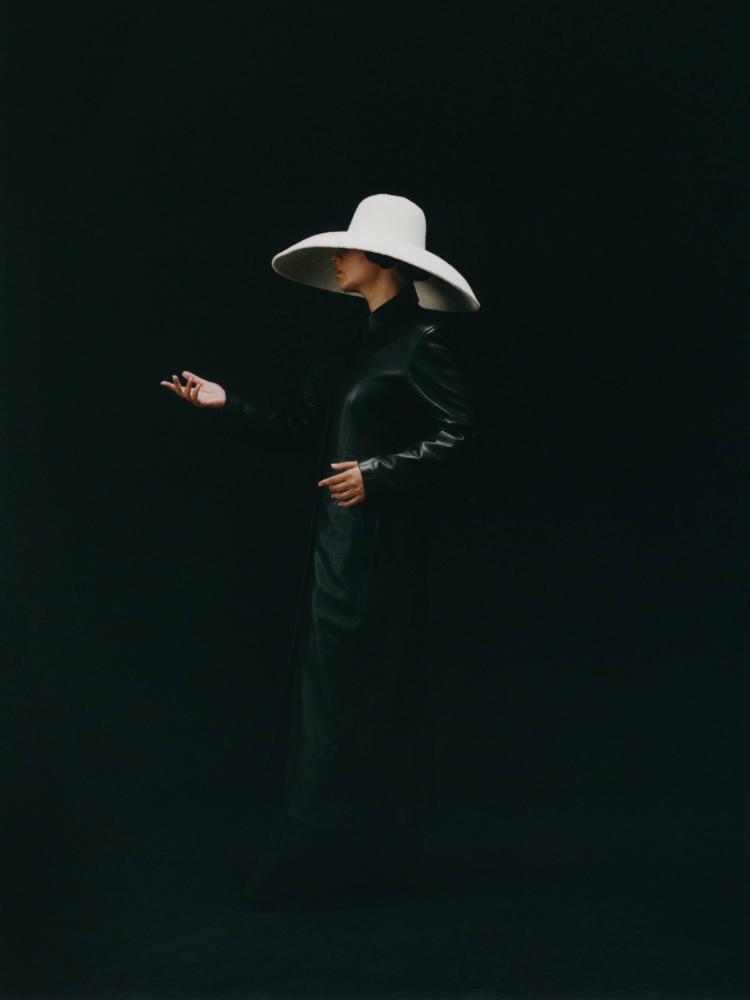
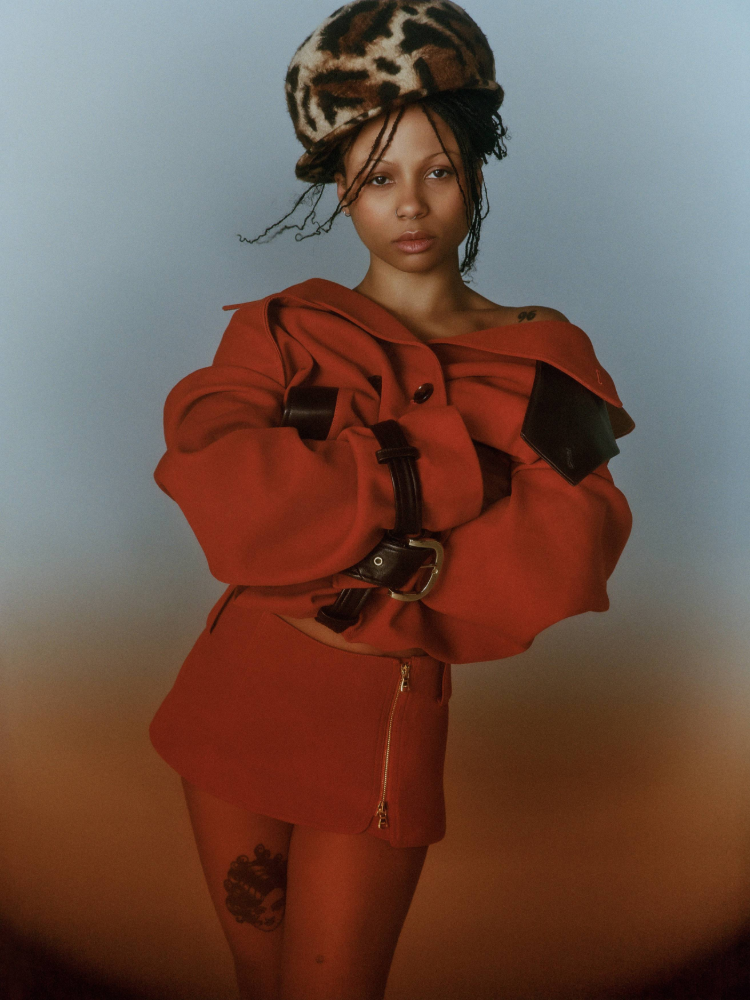
LEATHER COAT Nour Hammour / HAT Customized by Lorena Maza
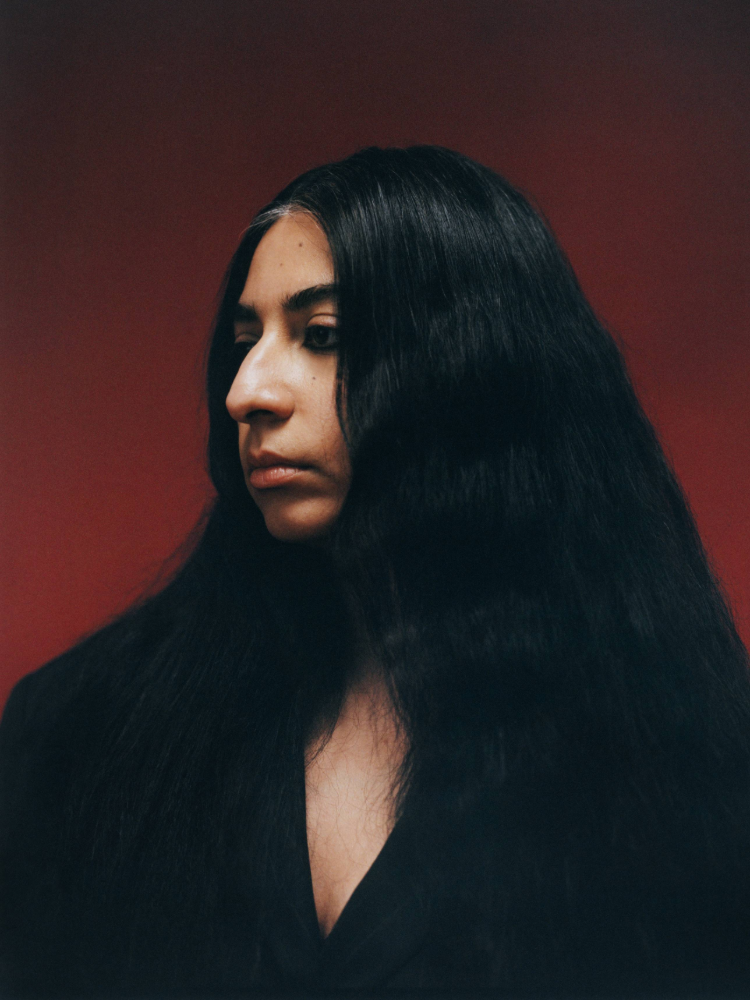
BLAZER Benzo
“As a South Asian artist making contemporary music in America, many people didn’t know how to define me.”
VJ: Do you feel like you’re an extrovert?
AA: Yes. I don't thrive in complete isolation and serenity. I like being out. I will make my own coffee at home but then after a few hours I’m like, ‘Where is everybody?’ I'm not going to go and take a walk on the beach and eat some papaya for breakfast and then write the perfect song. I need to be, like, tumbling off my ass into the void in order to write.
It’s part of being collaborative as an artist. Even if the art you’re making is completely your own, at the end of the day you have to tell the mix engineer what to do. There are so many people making the thing. Sometimes it’s not so literal. I went to see Jill Scott at Blue Note and she was three feet away and she touched my shoulder when she went on stage, and I felt like that was a collaboration with her energy. And I went to the Resonator Awards in Los Angeles, and we’re sitting at the table with Cardi B’s manager and Chakha Khan is singing. Cardi B’s manager and I go outside, and she FaceTimes Cardi B and is like, [laughing] “This is my little friend.” I introduced myself to her, and Cardi’s like, “You better pop that pussy! You better say your shit.” Then I went up to Chaka and said, “Hey, want to say hi to Cardi B’s manager?” Chaka is singing “Through The Fire” at this point, which is one of my favorite songs, and it’s like, “We really are alive through music.” You’re alive in your musical community. You could sit next to Cardi B’s manager completely nervous and quietly eat your salmon and leave, but I’m not going to do that.
VJ: Earlier in your career you were careful about being mislabeled as a world musician or a fusion artist.
AA: As a South Asian artist making contemporary music in America, many people didn’t know how to define me. There were a lot of firsts. There were a lot of question marks that needed to be answered. It was important for me to push back five years ago and talk about the framing of my work. But thank god that’s already happened. I feel free now. There will always be people who are listening to your music with their social bias first, but it's like a lot less than it was before. I'm not afraid of being read as a traditional artist from Pakistan or a world musician anymore. It just fucking doesn't matter anymore. ❤
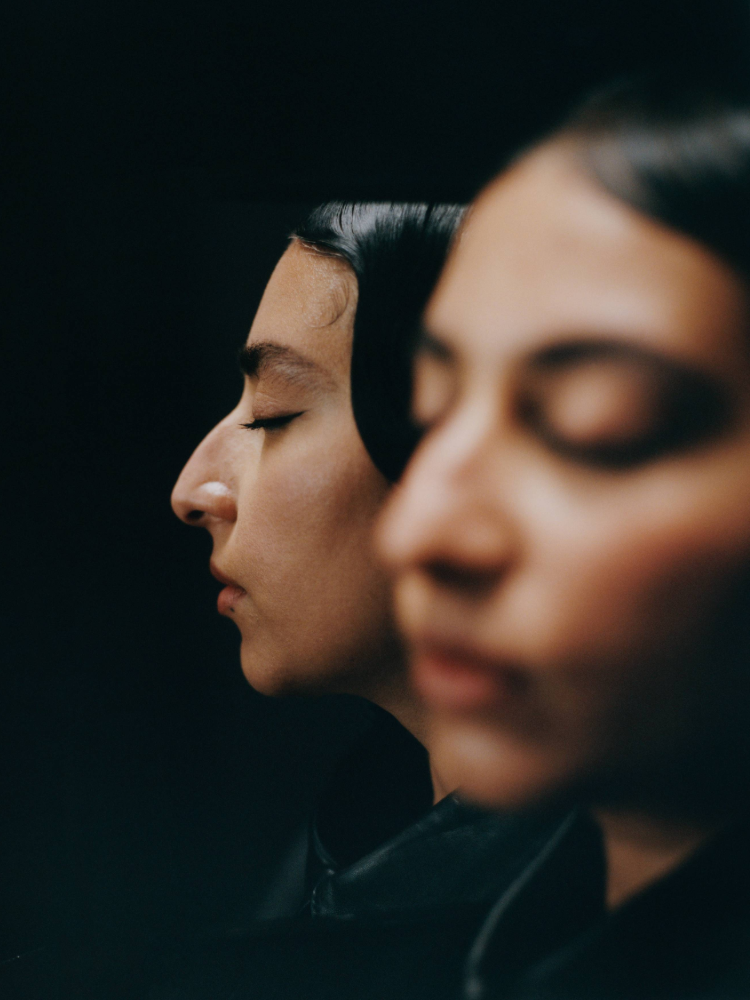
LEATHER COAT Nour Hammour
STORY CREDITS
PHOTOGRAPHY & CREATIVE DIRECTION Josefina Santos / CODIRECTION & DIRECTOR OF PHOTOGRAPHY Andrea Kinnerk / STYLIST Lorena Maza / HAIR Rosibel Del Jesus with Opus / MAKEUP Isabel Y Rosado / PRODUCER Jessica Hodgson / VIDEO EDITOR Matthieu Lamouche / PHOTO ASSISTANT Ana Aizer / STYLING ASSISTANT Michelle Uribe
HERO IMAGE CREDITS
LEATHER COAT Nour Hammour / HAT Customized by Lorena Maza
Read more stories