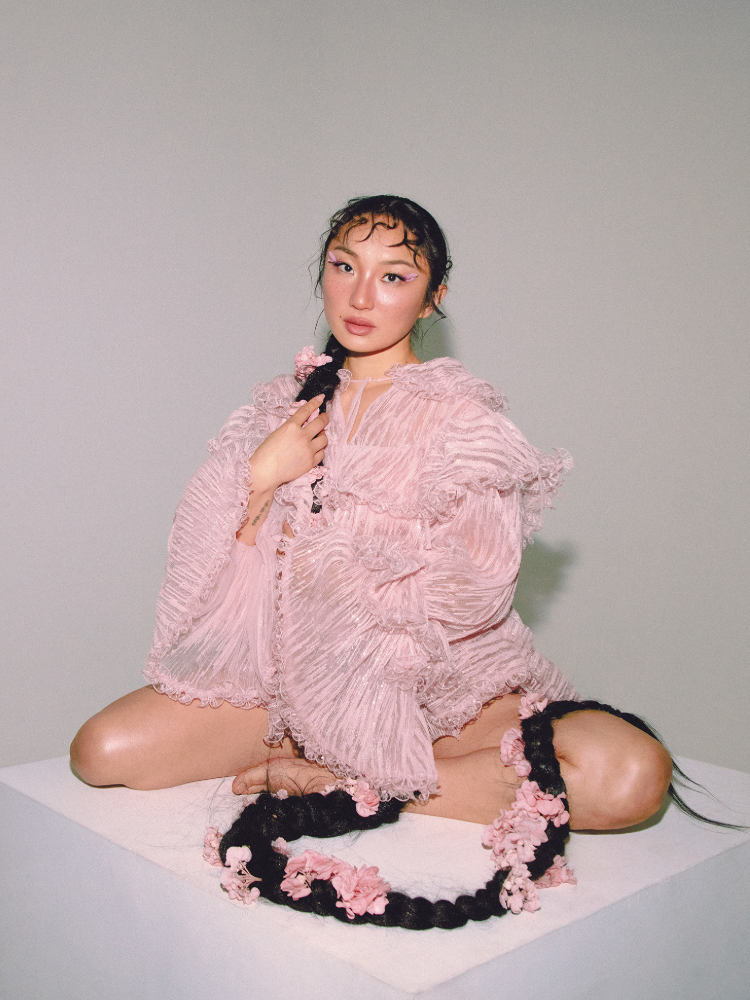
LANA LUBANY IS A KEEPER OF STORIES. The Yafa-born, Palestinian American singer has quietly become one of the most compelling new voices to emerge from the region onto the global stage, weaving together the emotional textures of her rich Arabic heritage with a Western musical sensibility, creating something entirely her own.
For Lubany, blending English lyrics with Arabic lyrics is an act of identity. When she first dared to write in Arabic, it felt, in her own words, like “poking fire.” The response was transformative. Her breakout track, “The Snake,” amassed over 17 million streams—far beyond what she anticipated—and sparked a wave of listeners who felt, perhaps for the first time, that someone was singing their world back to them. In that moment of recognition, something settled in Lubany.
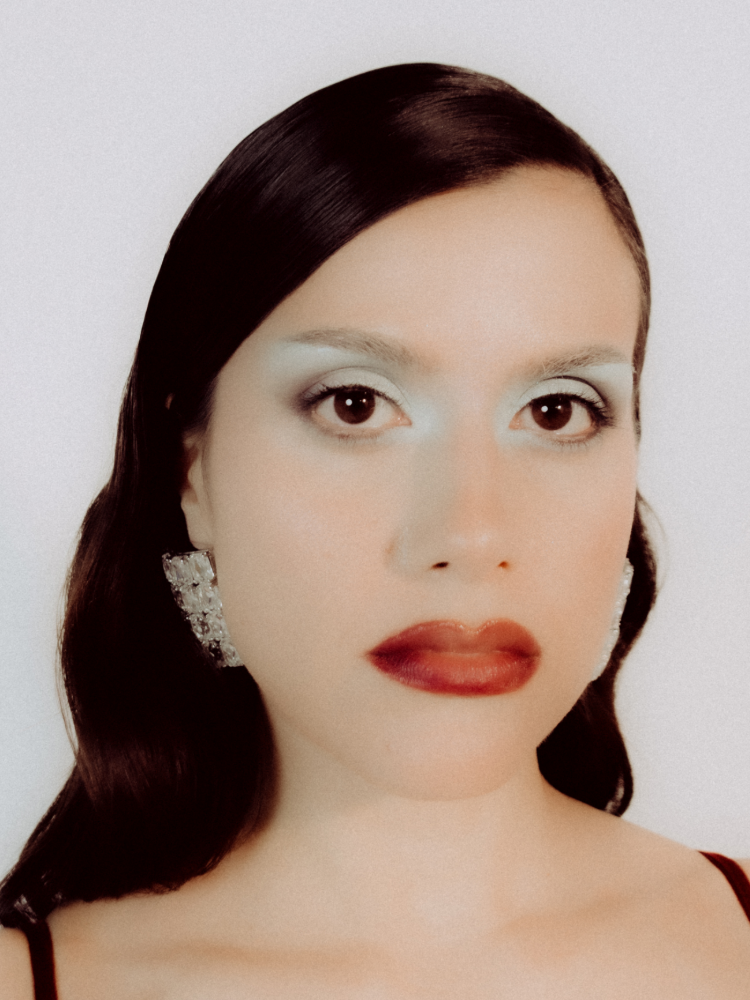
EARRINGS Area
That same courage runs through “Yafa,” her most personal work to date. Lubany built the song around her grandmother’s recorded voice, archiving a Palestinian woman’s memories of a city that shaped a family and a people. Lubany cried making it, and she still cries listening to it.
What makes Lubany remarkable is not only what she sings about but how naturally she holds it all. It’s personal and political, intimate and universal; and also captures the inherited pain and the quiet joy of being seen. In doing so, she has given countless listeners—Arab and non-Arab alike—permission to feel proud of who they are.
Now, with an album on the horizon and the freedom of building entirely on her own terms, Lubany is returning to the unfiltered instinct that started it all. I sat down with her to talk about memory, identity, the weight of representation, and what it means to make art when the world is on fire.
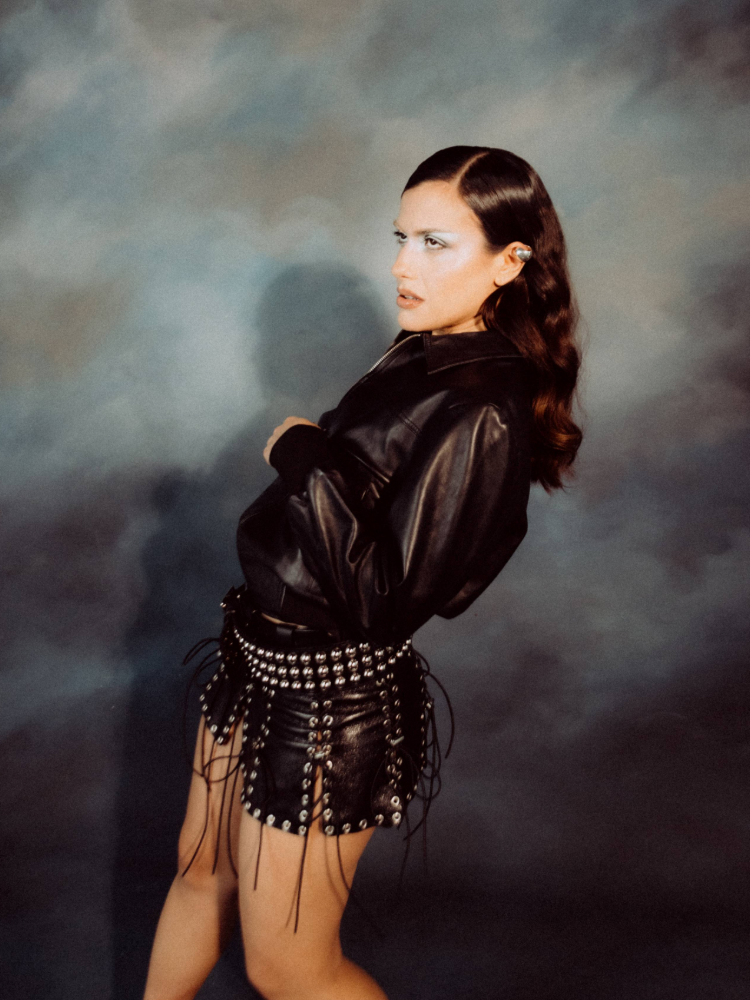
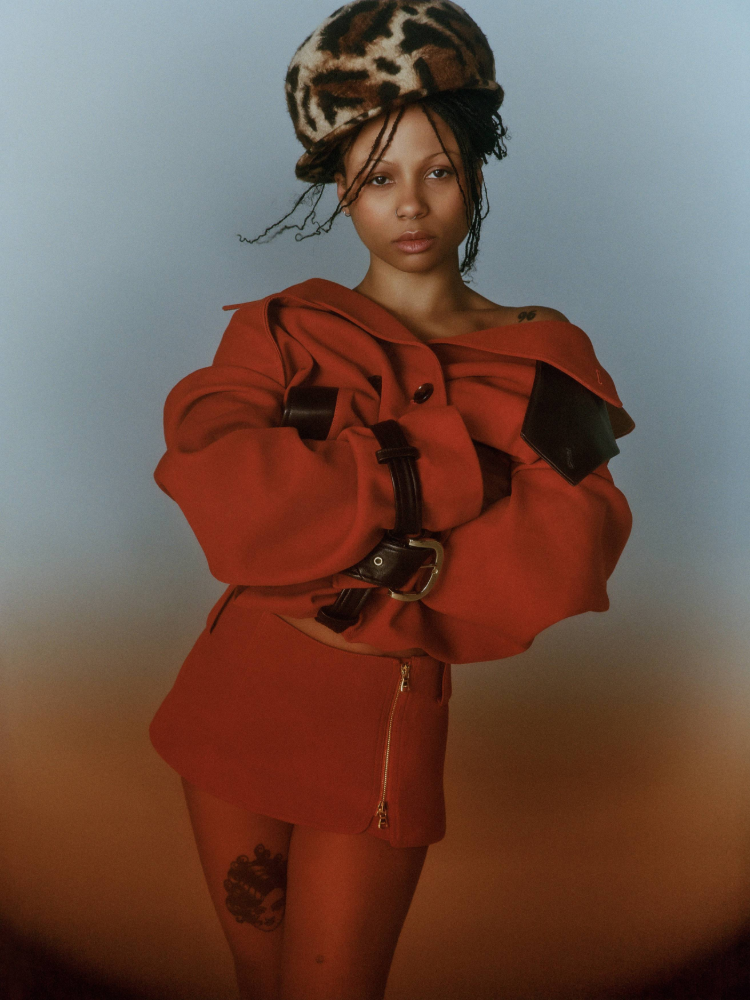
JACKET R13 / SKIRT, BELT & BRA Zana Bayne / EARRING Dinosaur Designs
KHALID ABDEL-HADI: Your roots feel very present in your music. Where did you grow up?
LANA LUBANY: I’m from Yafa, born and raised, and my parents are from Nazareth. So I grew up between the two cities.
KA: Your song, “Yafa,” feels like an act of preservation. You’re archiving your grandmother’s voice, your family’s memory. What does it feel like to carry that kind of responsibility as an artist?
LL: History drowns out over time. A lot of people’s stories get erased. It’s important to create work that might outlive us. “Yafa” is definitely one of those. It’s not just my grandmother’s story. A lot of people relate to it, that feeling of looking back at something bittersweet, something you no longer have. Even non-Palestinians, in their own way.
KA: That song made me think about how I could start preserving my own family’s memories. When you go back and listen to “Yafa” today, what comes up for you?
LL: Every time I put something out, I detach from it. It’s not mine anymore—it belongs to the world. But “Yafa” will always remain deeply personal. It’s a painful song to listen to. I still cry to it. And at the same time, it brings me so much comfort to hear my grandma’s voice.
Every time I hear it I think, That’s what teta sounded like. She’s not with us anymore. Nobody else could have written that song. It’s mine. And it was an honor to share it with the world.
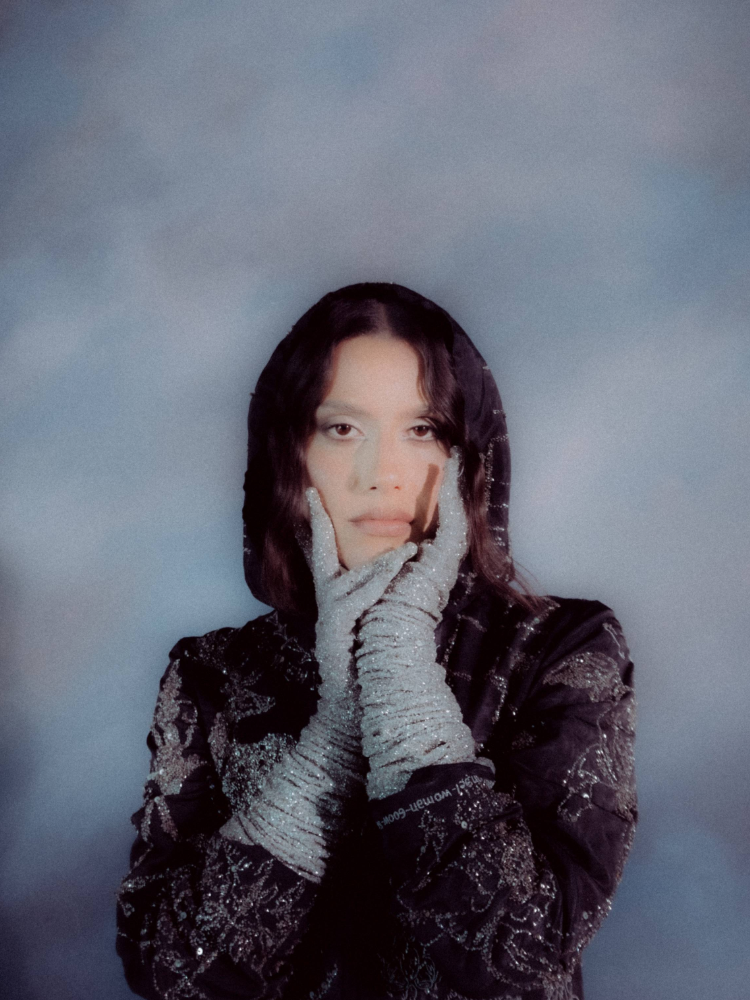
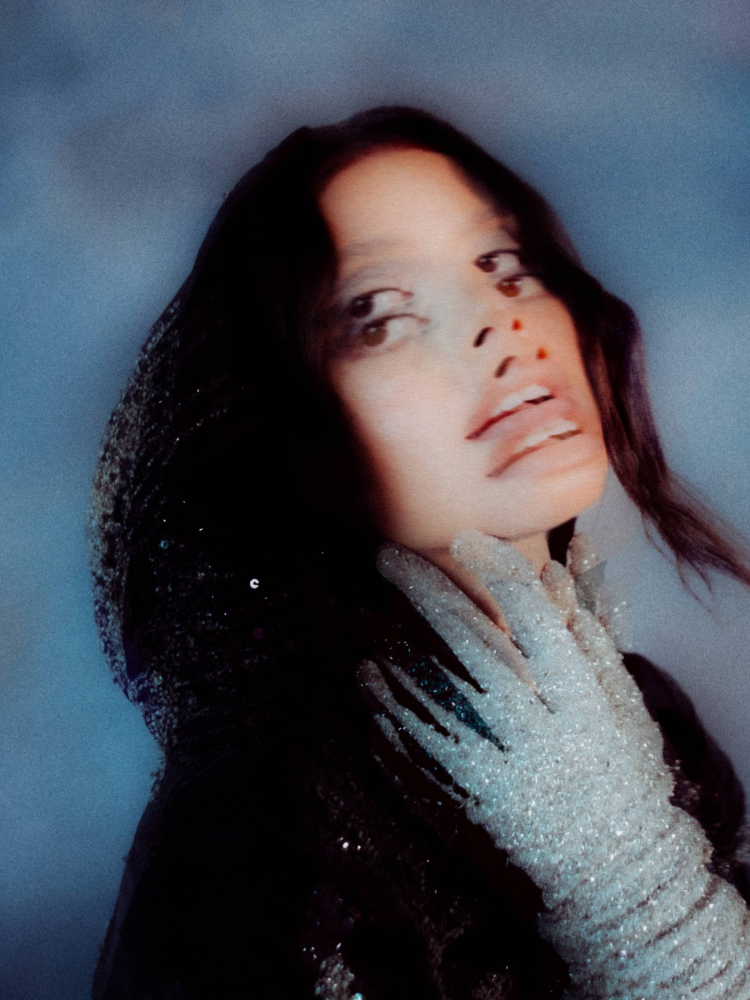
TOP & GLOVES Wiederhoft
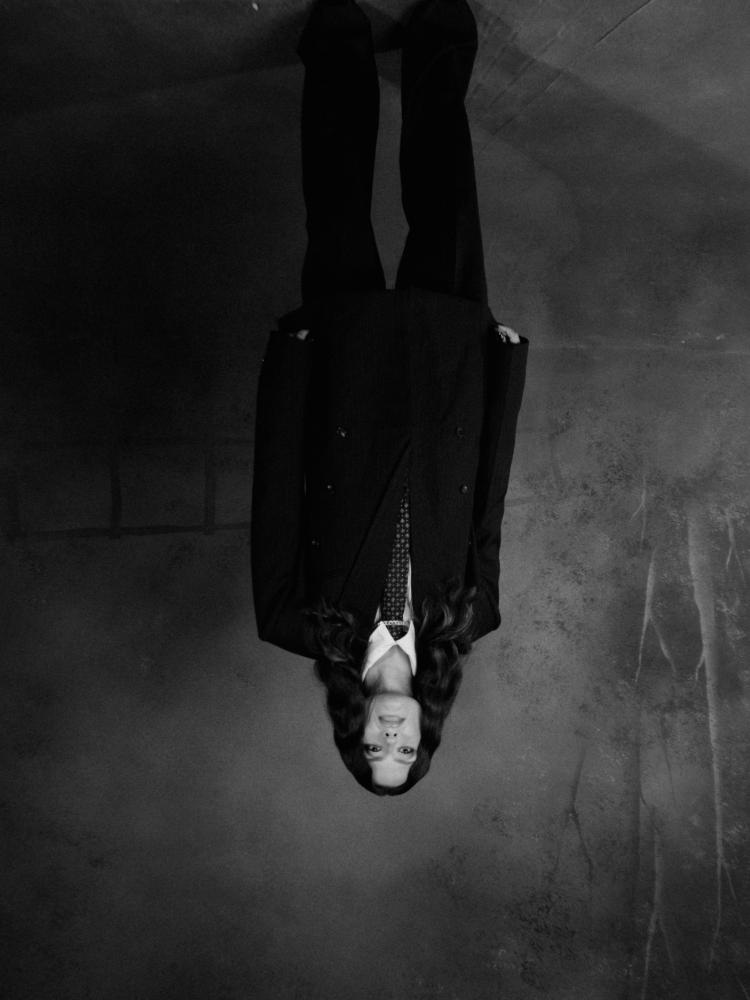
SUIT The Frankie Shop / SHIRT The Attico / TIE The Tie Bar / NECKLACE Loren Stewart / SHOES Camilla Gabrieli
“It’s important to create work that might outlive us.”
KA: Was writing in Arabic for the first time a conscious decision, or did it just happen?
LL: It was hard. Being fluent in Arabic is one thing; creative writing in it is completely different. It felt like poking fire. Scary, but I did it, sat with it for a few months, and it just felt different. In a good way. The real push came when “The Snake” went viral. Even a video of my mom reacting to it was going around. To me, that was my act of accepting myself, and I got rewarded for it. It’s a moment I go back to whenever I’m feeling lost or ungrounded. It still gives me stability.
KA: You’ve described yourself as a Western-style singer, yet Arabic music and culture are so deeply embedded in who you are. How do you do both without one overshadowing the other?
LL: Technically, the way I sing is more Western, but I took the elements I could from Arabic singing and merged them into my own style. I feel like I’ve developed a voice where, whatever I sing, it just sounds like me. That came from genuinely growing up in both worlds at the same time. My grandmother is American, from New Jersey—she brought jazz, theater, American folk music into my life. And then at home, at every family gathering in Nazareth, there was Fairuz and Umm Kulthum, someone always breaking into song.
On top of all that, I was obsessed with Hannah Montana and Demi Lovato. So I grew up really exercising both—not a little bit of each, but fully both. When I sing Arabic songs, I don’t sound like an Arabic singer. Sitting somewhere in the middle, I’ve found something that feels very authentically me.
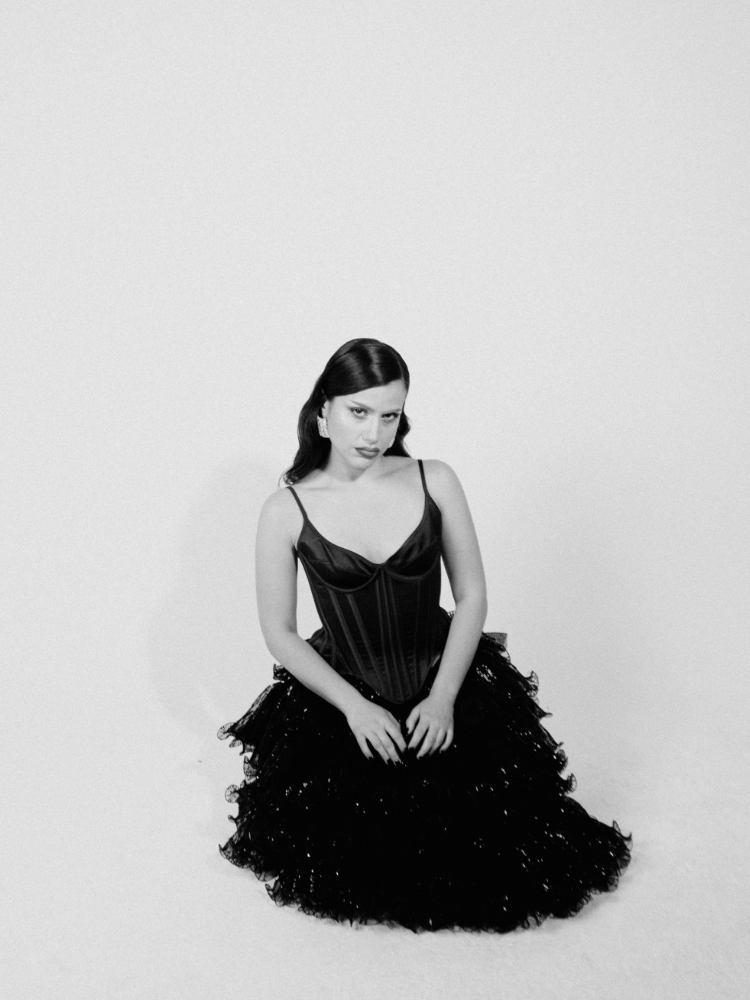
CORSET Wiederhoft / DRESS (WORN AS SKIRT) Aknvas / EARRINGS Area
“Every time I put something out, I detach from it. It’s not mine anymore—it belongs to the world.”
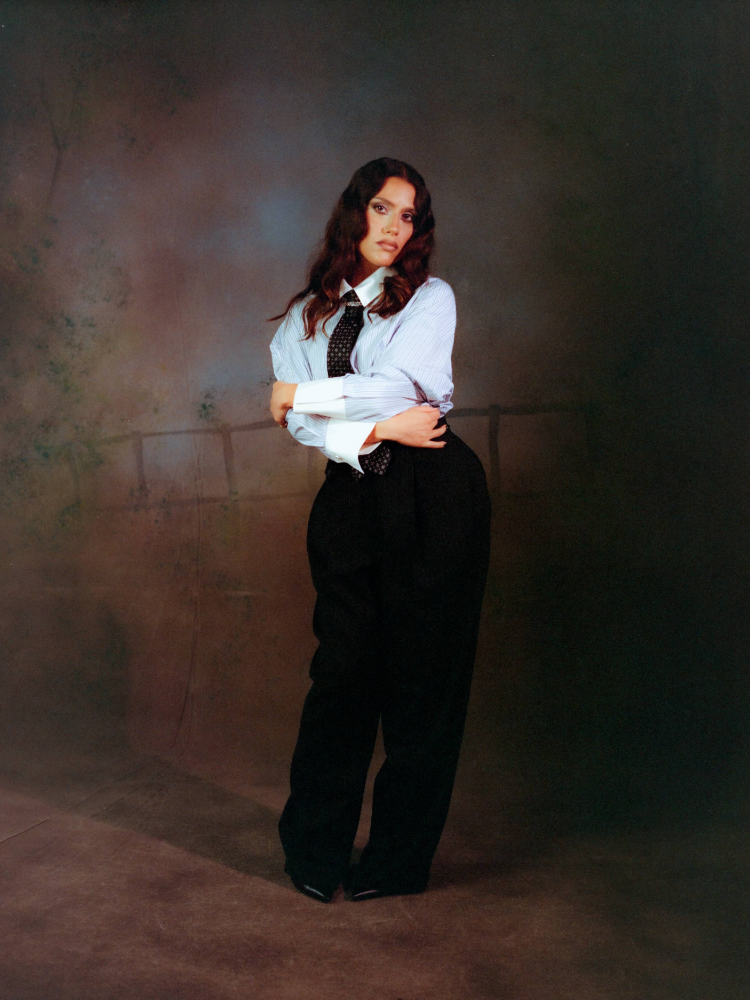
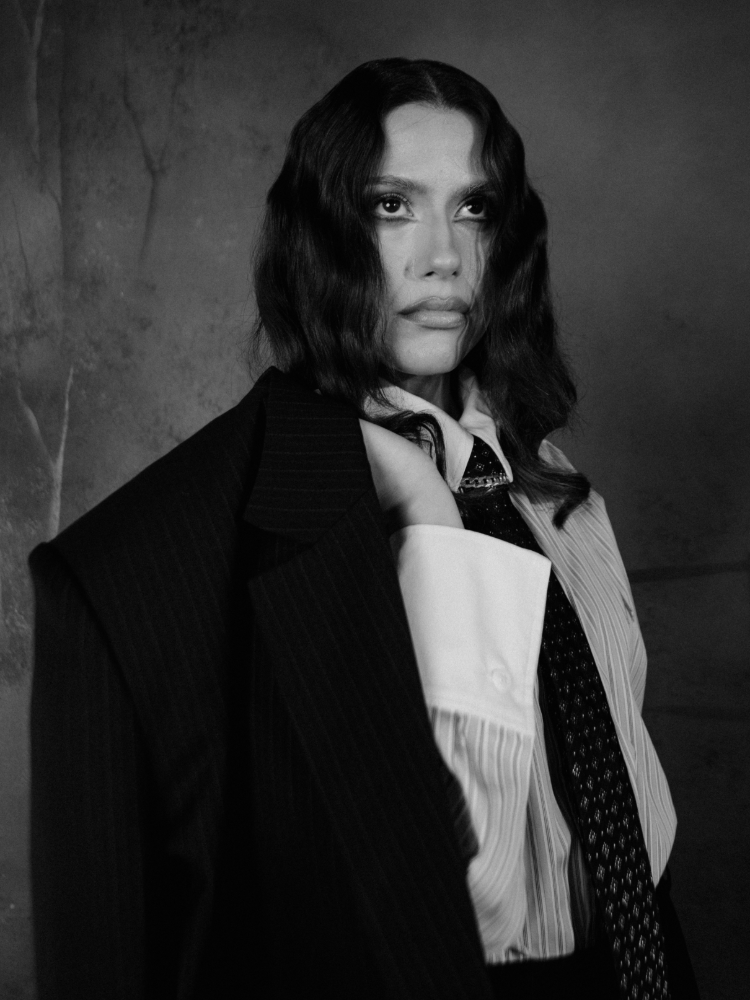
SUIT The Frankie Shop / SHIRT The Attico / TIE The Tie Bar / NECKLACE Loren Stewart / SHOES Camilla Gabrieli
KA: Arab artists are gaining real global visibility right now, but there’s tension in that, too: who gets seen, and why. Where do you see yourself in all of that?
LL: My momentum did slow down, because of everything that happened. I used to let that weigh on me more than I do now. But I’ve accepted it. I still believe in my voice and in what I have to say. And honestly, I’m just happy to see other artists succeeding, to see the movement grow so far beyond where it was when I started.
Everyone is building their own world. I’m building mine. The attention will come. Right now I’m focused on the work and on connecting with the people who are already here for it.
KA: As someone who has consumed so many stories of displacement, loss, and inherited trauma, it’s becoming harder to engage with them emotionally. I wonder sometimes whether we simply get used to carrying these emotions, and maybe that’s the saddest part of all.
Did watching a film like All That’s Left of You [a 2025 film that follows a Palestinian family across three generations] affect you?Or does growing up with this reality change the way it lands?
LL: Growing up there, everything feels normal. It’s so normalized. And then you watch a film like that and it reminds you that it’s not. But it’s also representation. You’re seeing something on screen that you can so strongly relate to.
“I go to art for escapism, to experience something that reflects what I’m living.”
KA: Being a Palestinian artist comes with a particular kind of pressure. Everyone sees their homeland in a certain way—everyone has an opinion on how one should represent, how much, and in what way. How do you navigate that?
LL: The internet is a judgmental place—I learned that early. The level of negativity has only grown these past few years, and I understand it. People are angry. Life is hard. Everyone needs somewhere to direct that. I get it. But I’ve done the work of detaching from it. It doesn’t touch my art and it doesn’t touch who I am. The hardest criticism to receive is the kind that questions my identity or assumes things about my politics, things I can’t control and didn’t invite. That used to get to me more.
Now I just let the internet do its thing.
KA: What does it mean to you when someone says your music made them feel proud of where they come from?
LL: It’s cathartic. It’s healing. Knowing that kids feel proud to be Arab, that people who’ve struggled with the same things I’ve struggled with feel like it’s okay to be seen, that’s everything. It’s one of the things that keep me going.
KA: You’ve mentioned an album on the horizon. Where are you with it?
LL: I’ve been through a lot, beyond just the political—even with the people around me. Right now I don’t have management. I’m back to square one, back to “The Snake” days, when I found that unshakable self-belief and just ran with it.
This album feels like that…no one telling me who to be. It’s still bilingual, still world-building, more so than anything I’ve done before. I’m really excited about it. It’s a work in progress, but we’re getting it to the right place. End of this year, maybe next, inshallah. ❤
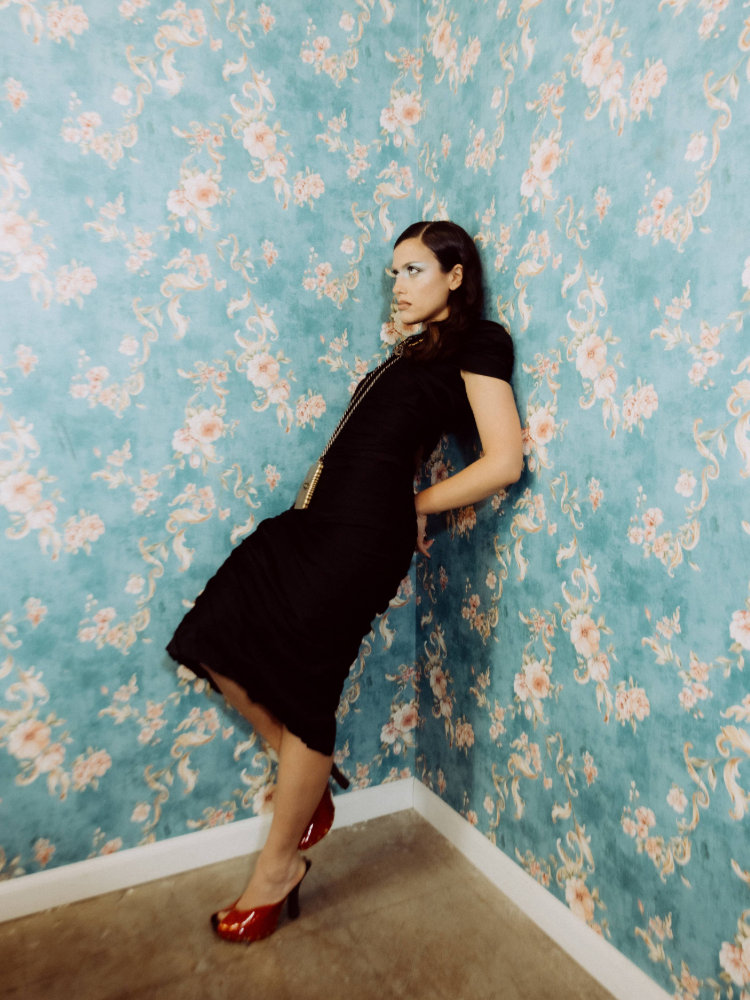
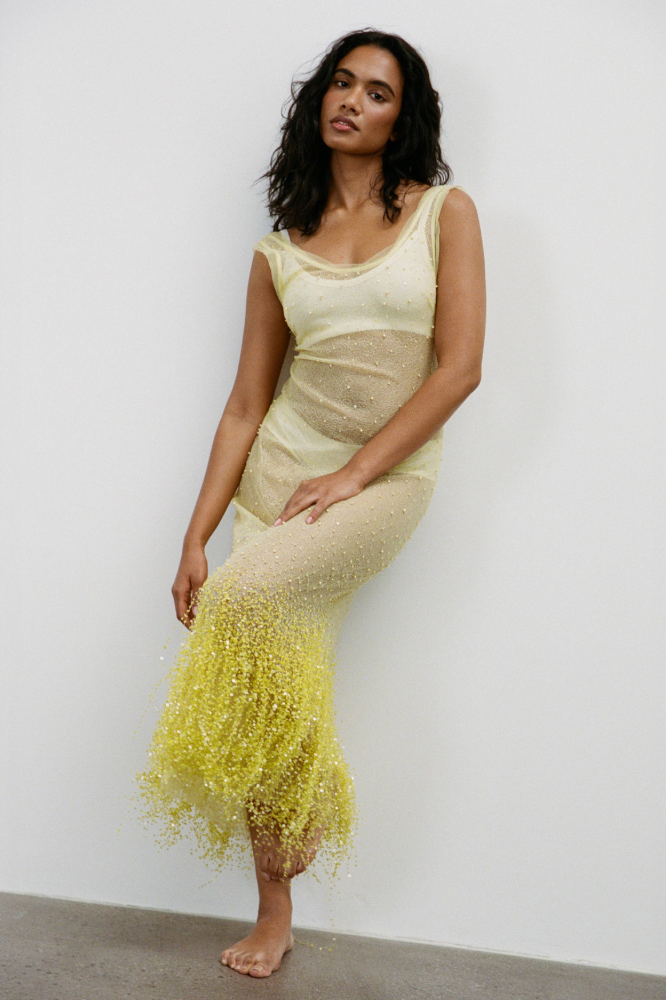
DRESS, NECKLACES & SHOES Versace
STORY CREDITS
PHOTOGRAPHY Abdi Ibrahim at De La Revolución/ WORDS Khalid Abdel-Hadi/ ART DIRECTOR Yusuf Ahmedat NeoNeo Studios / STYLIST Marisa Ellison at Opus Beauty / HAIR Stephen Low at Tracey Mattingly / MAKEUPPauly Blanch at The Wall Group / STYLIST ASSISTANT Nicole Goodman / PRODUCER Becca Hong
HERO IMAGE CREDITS
TOP & GLOVES Wiederhoft
Read more stories