
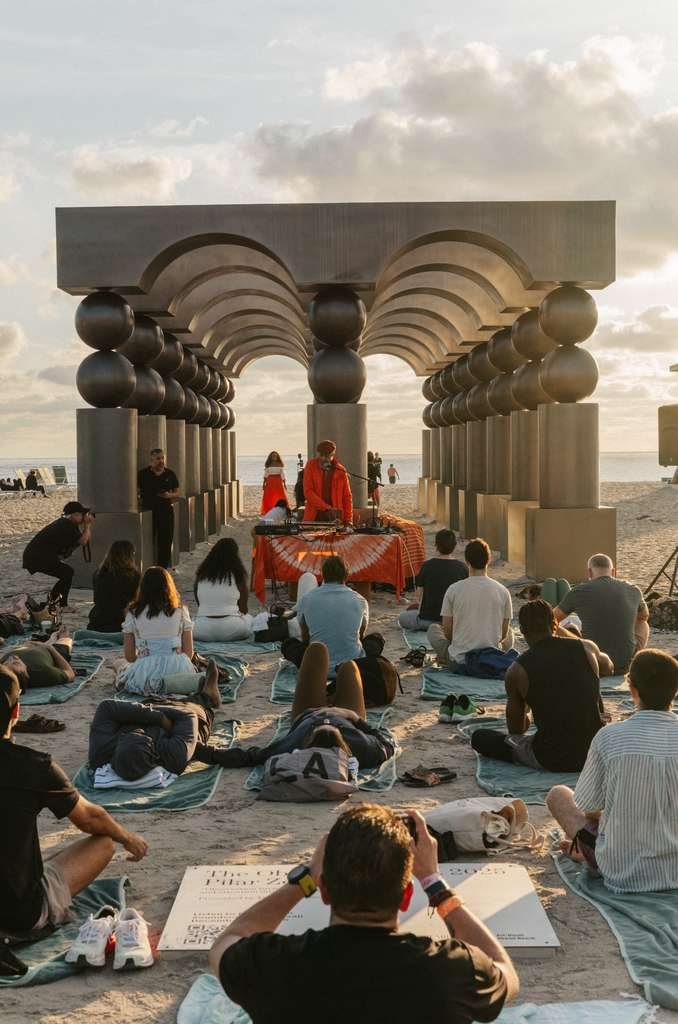
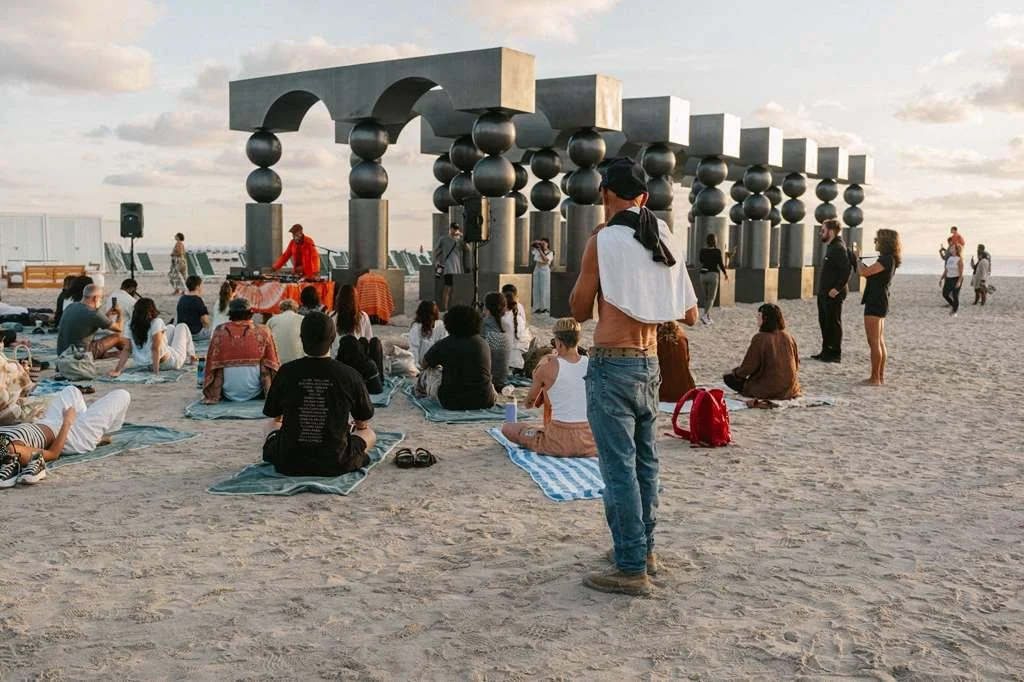
At about 11 p.m. on December third, I told my Art Week crew that I’d be waking up for a sunrise session with Laraaji at Pilar Zeta’s The Observer Effect on the beach. By that point we were already running on almost no sleep—Art Week has a way of throwing interesting people and even more interesting conversations at you nonstop, and it’s hard to turn any of it down.
So committing to a sunrise-anything felt questionable, but I knew I had to be there. And the second I arrived—music, art, sun, sea—I knew it would end up being one of the most memorable moments of the week.
What followed was a conversation about perception, presence, and the ways art can shift your internal atmosphere.
KT: What was the emotional or philosophical spark behind this work?
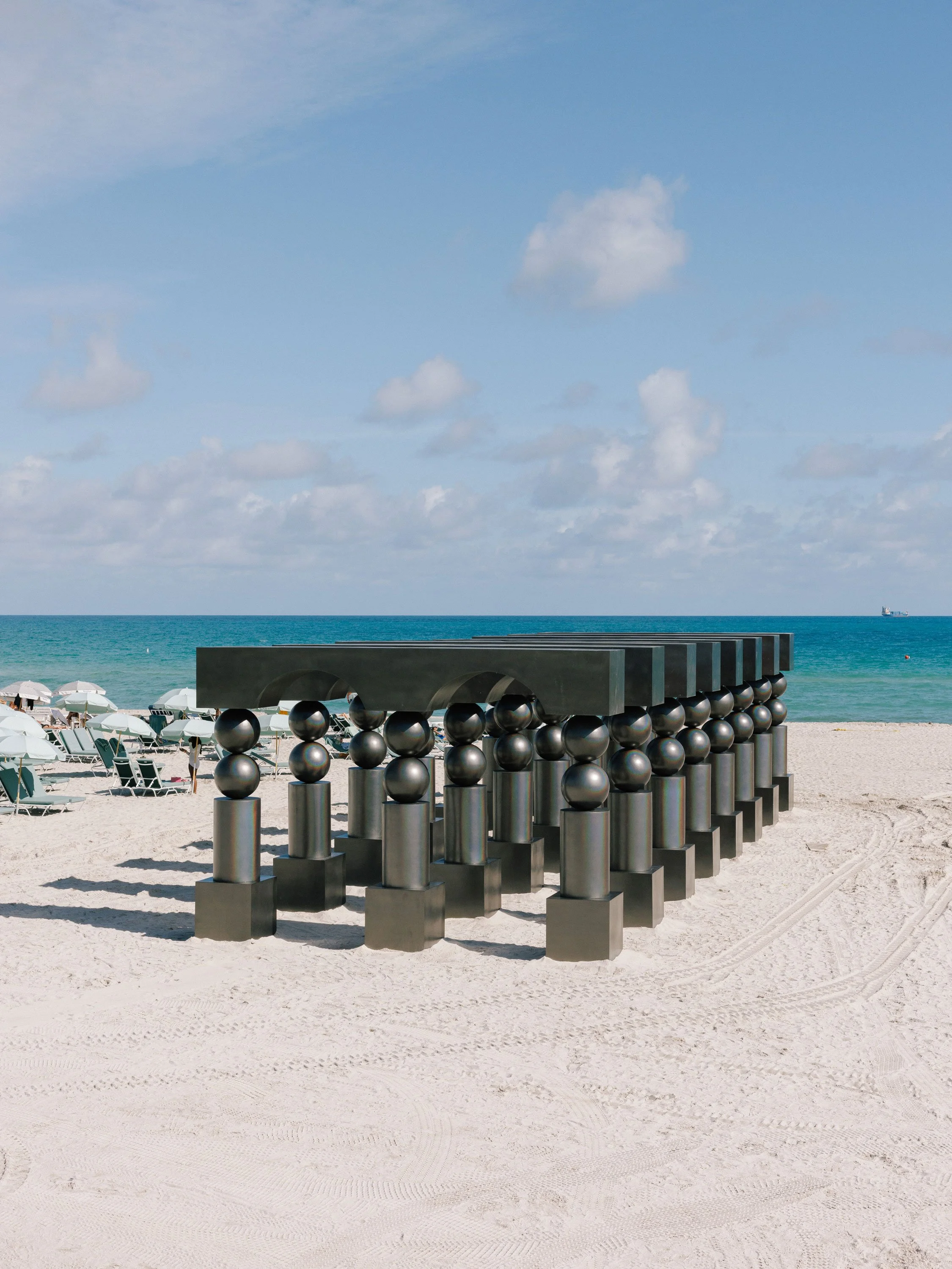
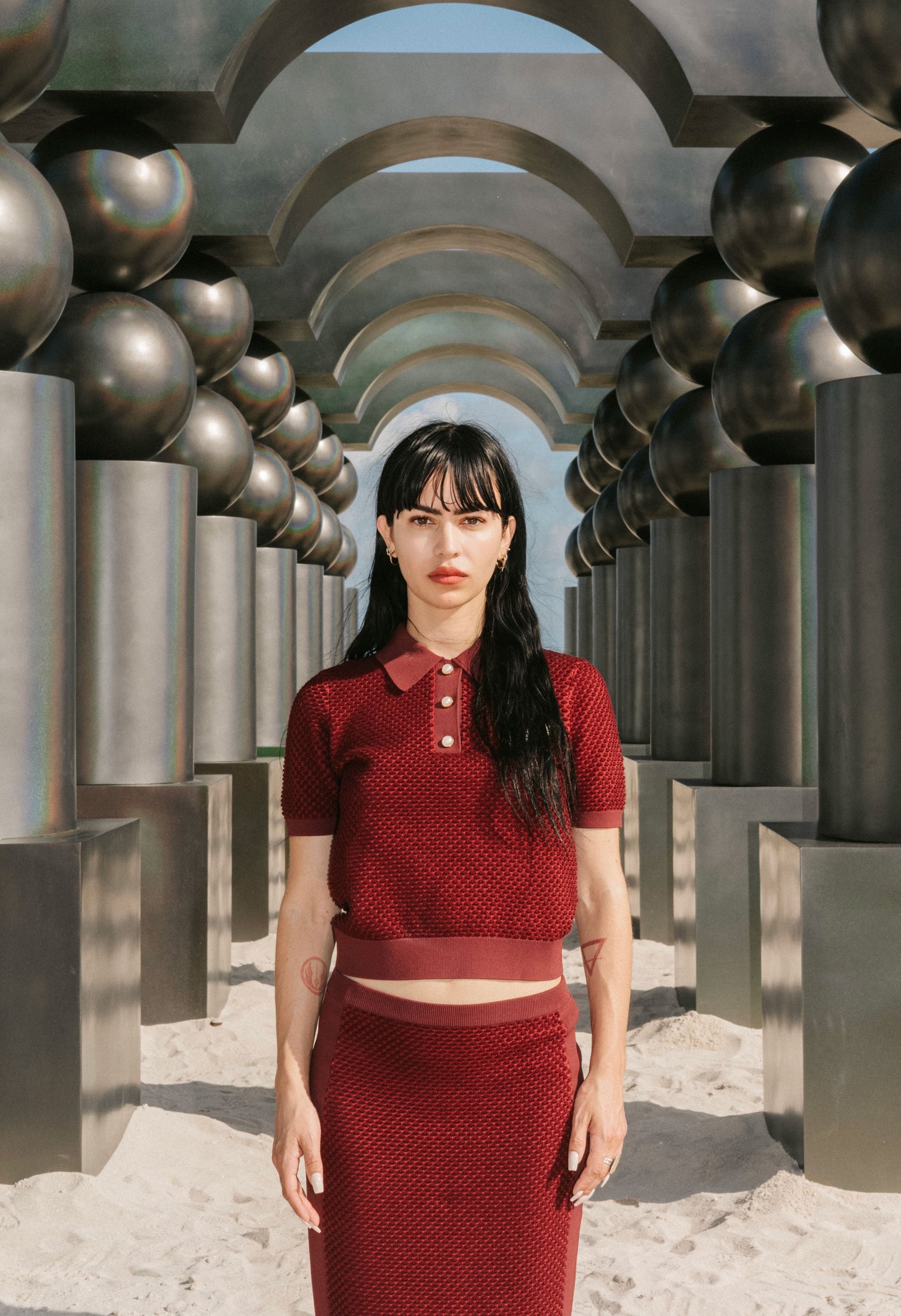
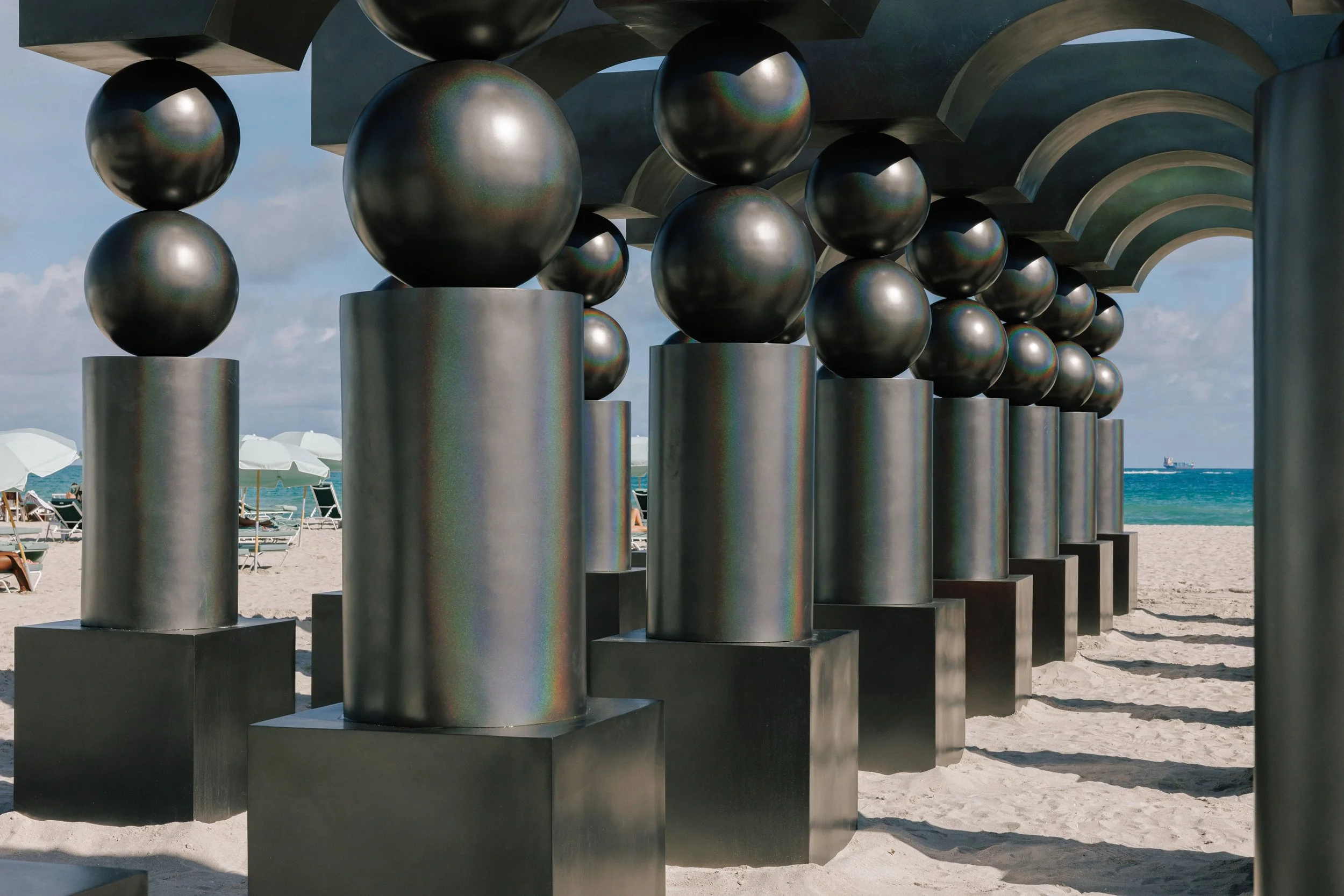
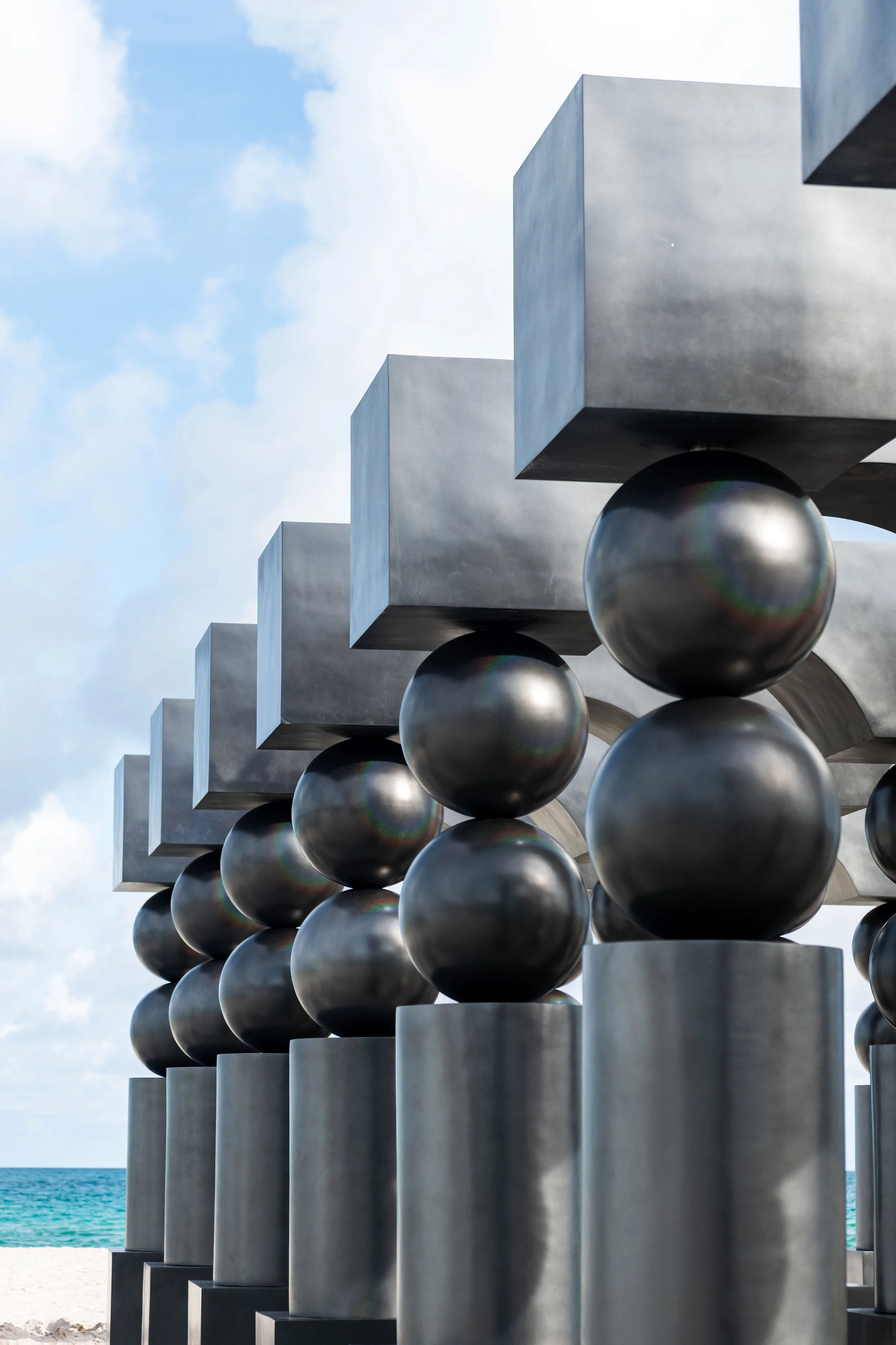
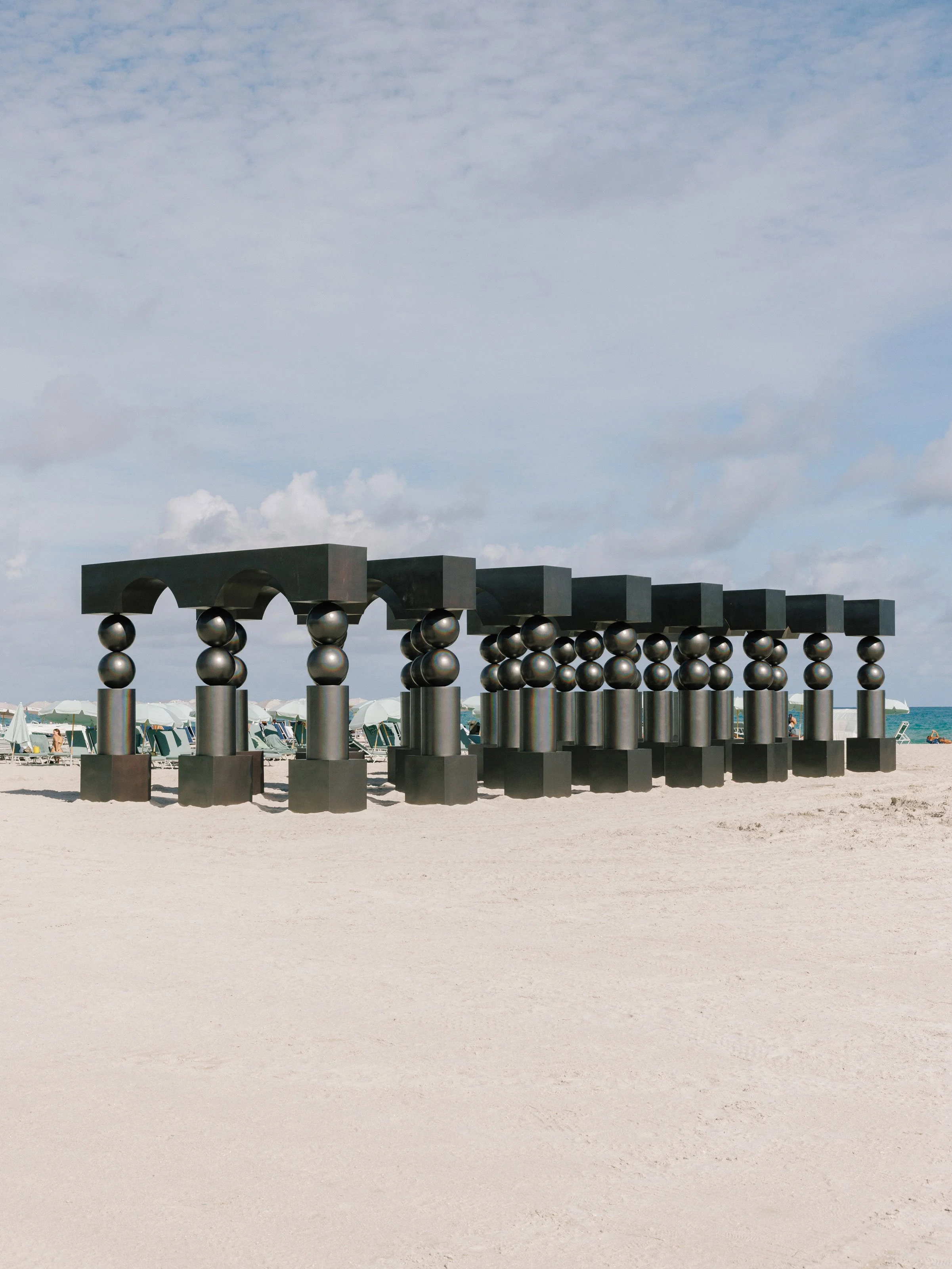
Pilar: The spark came from my fascination with the quantum idea that observing something changes its behavior. I wanted to create a piece that makes people aware of their own presence—how perception itself shapes experience. The Observer Effect became the title and the core idea. The installation is a physical metaphor for that moment when consciousness meets matter.
KT: How did the environment influence the installation?
Pilar: This work only makes sense in dialogue with its surroundings. I loved the tension between the city behind you and the open sea in front of you. The portal sits exactly at that threshold, where structure dissolves into horizon. The environment becomes part of the piece, and the piece becomes a frame for the environment.
KT: How do you want people to feel when they move through it?
Pilar: A subtle shift—almost like stepping into a different state of awareness. Not escape, but an interruption of habit. A moment where you notice yourself noticing. If walking through it becomes a small inner recalibration, that’s the intention.
KT: What symbols or shapes are most magnetic to you right now?
Pilar: Pyramids. They concentrate energy in a way that feels both ancient and modern. Their geometry holds orientation and focus. They represent stability, but also ascent. And to me, they’re the most sacred sculptures on the planet.
KT: Do you consider your art guidance, escape, or transformation?
Pilar: Never escape. I don’t believe in leaving reality. My work is transformation through attention. Guidance comes from the viewer’s experience, not from me imposing anything. I offer the structure; the rest happens inside the person.
KT: Has anything shifted your creative approach recently?Pilar: Yes. I’ve changed the way I take in information. I’m less interested in accumulation, more in perception itself. Learning through experience—observing how ideas move through my body and intuition—has made my process less linear.
KT: Why Laraaji?
Pilar: He’s influenced me for years. His music expands time and softens the borders of perception, which aligns perfectly with this installation. His presence is luminous. Having him activate the work felt like completing it rather than decorating it.
KT: If viewers take one message from The Observer Effect, what should it be?
Pilar: That reality is more fluid than it appears. The act of observing can shift what is perceived. If people leave with even a moment of curiosity about how attention shapes experience, the installation has done what it needed to do.
KT: How do you feel?
Laraaji: Right here and right now—yeah. I’m aware of the Earth plane. I’m aware of the infinite present time.
It’s the silence of the mental chatter, being aware of the stillness that’s here now all the time.
The self that takes off all the titles, the classifications, the names, and just sits with “I am.”
Nothing attached to “I am” is “I am.”
Stillness.
And it’s the place where there’s no linear time flow—eternal, present time.
KT: Have you always been able to get to that place?
Laraaji: I used to do it through music without knowing what was happening, until I practiced meditation. Then I started being able to identify that it was a chartered destination in the meditation world.
It’s the place that revealed my ability to do improvisation—much more music.
Improvisation comes from this place because there’s a joy of not being constricted by the third and fourth dimension, or the third-and fourth-dimensional emotional, human emotional body.
We move into what’s called light body, or the Timeless Presence itself. There’s joy, passion, ecstasy in feeling unbound by time.
It flows through the music when I prepare right—free-performance tune-up, yoga, movement, stretch, dance, affirmation.
KT: Dance?
Laraaji: Yes, dance. Movement. Movement translates into the way I interact with the physical instrument.
I practice meditative movement—moving as though I’m moving not only in the third and fourth dimension but rapporting with this invisible “time is now.”
It’s imagination. It helps drive the musicalization. I imagine water or the ocean playing through me—wave undulations, whirlpools.
The oceans are neutralizers of planetary energy. So if the ocean plays the zither through me, the music can harmonize and tranquilize listeners—neutralizing subconscious stress patterns, anger, tension.
Music works through suggestion—the fluidity of the ocean, timeless present, easy breathing.
I imagine angels dancing in the ethers and copy what I’m imaging through the zither.
KT: I love that.
Laraaji: I’m also affected by the sounds I grew up with. Veterans Day Parade, marching band. As a child, that rhythm impressed me. That rhythm finds its way into my music today.
Time with my grandfolks in Virginia—mule-drawn wagons. The mules had a certain gait, a rhythm. That rhythm finds itself into my music too.
I also like to dance a lot—playing for happy body movement.
These things drive my creative improvisation.
In yoga class you stretch and breathe for an hour and fifteen minutes. Then final pose; corpse pose.
Your body relaxes, breath relaxes, and you’re in the present moment, not thinking.
I would play for corpse pose. Playing for an awareness field that is not busy—open, spacious, soft.
Another model for my music.
I’ve also played on sidewalks in New York in the early ’80s. Random audience.
Playing while trucks go by, noises—learning to stay focused in any sound environment.
KT: When you play, are you interacting with the atmosphere? Or bringing something into it?
Laraaji: Good question. I intentionally use sound to suggest a frequency of awareness—gentle, soft, open awareness that is present and not caught up in the anxiety of the world.
The music flows. It opens. It’s silent at times. It introduces imagery. It drives the emotional imagination of the listener.
They might see dances. They might feel weightless and floating. They might drop into stillness, go to sleep, lose a headache, get up and move, or go into memory—memory bank—help, ecstasy, beautiful moments.
I offer a space for the imagination to soar and not be bound by your personal agenda, at least for the hour I’m performing.
Some would call it channeling. I don’t think about what I’m gonna play. It’s not scripted.
KT: Has it always been like that? Even with albums?
Laraaji: They’re all in-studio improvisations. I improvise long-stretch music, then edit the ones with interest.
It’s always been improvisation. Even the song material is sung for the first time, fresh out of recording.
KT: Anything feel new lately in your practice?
Laraaji: I discovered that I can leave more space and pauses in the performance. And that I can include laughter—therapeutic, healing laughter.
Laughter and space.
Laughter and space.
And electronics are more high-quality and portable now. I’m able to transport more interesting musical expressions.
KT: This was beautiful. Thank you.
Walking away, I kept thinking about something both of them pointed to in different ways: how much of our experience is shaped not by what we look at, but by how we’re looking. The Observer Effect wasn’t just a title—it was a practice. Mine began at sunrise.
STORY CREDITS
INTERVIEW Karina Trofimova
PHOTOGRAPHY Jamees Jackman & Marina Gold
Read more stories


